Skip to content
Pennzoil Vs Mobil 1: which is better?
Pennzoil Ultra Platinum and Mobil 1 represent two different philosophies that both deliver excellent results.
Pennzoil Ultra Platinum uses a gas-to-liquid (GTL) synthetic base oil made from natural gas rather than crude oil. This manufacturing process gives it an edge in engine cleanliness and resistance to oxidation.
Mobil 1 prioritizes film strength, which means better protection during metal-to-metal contact under extreme loads. This is particularly important during cold starts and high-stress driving.
Let’s get right to it: Pennzoil typically wins on piston cleanliness and oxidative stability. Mobil 1 edges ahead on overall durability and fuel economy. Both oils easily handle extended drain intervals of 10,000 miles or more when used with appropriate oil filters, and both meet or exceed current API and ILSAC standards.
The decision essentially boils down to what matters most for your specific application. High-performance engines that see track time might benefit from Pennzoil’s cleaning properties. Daily drivers focused on longevity and fuel costs might lean toward Mobil 1.
This post gives you a head-to-head comparison between these oils based on engine protection, fuel economy, leak prevention, and price can help you choose the best-suited product for your need.
Pennzoil Vs Mobil 1: Product Line Comparison
The main difference between these oils is how the base stock is manufactured. Pennzoil Platinum and Ultra Platinum use Gas-to-Liquid (GTL) technology. This GTL process produces a fully saturated base oil with essentially no sulfur or nitrogen. Shell, which owns Pennzoil, pioneered the large-scale use of GTL base stocks.
The key advantage is that GTL base oil doesn’t contain the Group III+ hydrocracked oils that most competitors blend with Group IV synthetics, which gives it a cleaner starting point.
Mobil 1 historically built its reputation on Group IV Polyalphaolefins (PAOs), which are chemically synthesized molecules. Modern Mobil 1 formulations blend Group III+ (hydrocracked) and Group IV (PAO) base stocks. For example, Mobil 1 Supercar 0W-40 uses a PAO-Ester blend (Group IV/V). However, newer API SP formulas like the 0W-40 European Car Formula have moved away from the traditional PAO-Ester blend entirely, with completely redesigned base oil and additive packages.
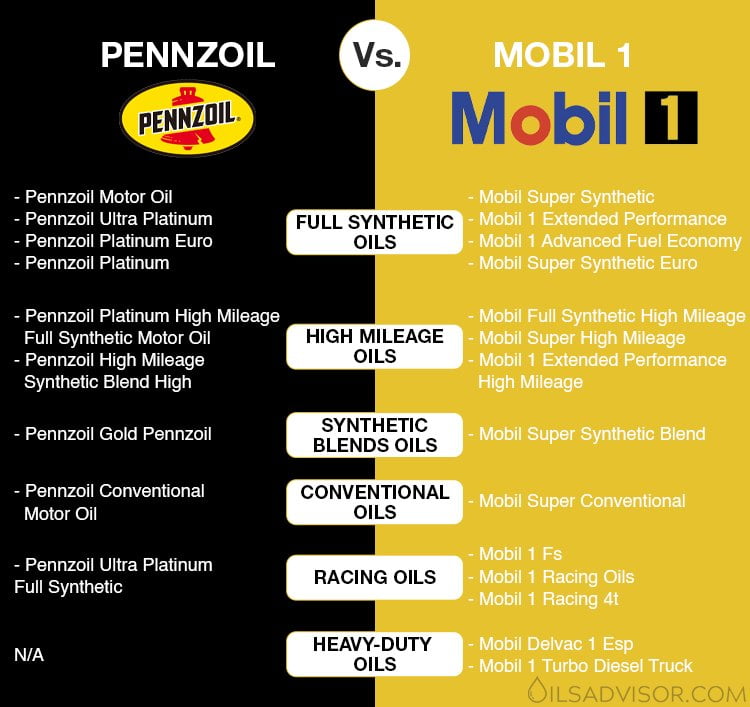
Pennzoil’s Product Range
- Pennzoil Ultra Platinum (full synthetic made with natural gas, top-tier)
- Pennzoil Platinum (full synthetic with advanced protection)
- Pennzoil Platinum High Mileage (full synthetic for vehicles over 75,000 miles)
- Pennzoil Platinum Euro (for European vehicles)
- Pennzoil Full Synthetic
- Pennzoil High Mileage Full Synthetic
- Pennzoil Gold (synthetic blend)
- Pennzoil High Mileage (conventional-based for vehicles over 75,000 miles)
- Pennzoil Motor Oil (conventional base oil)
Mobil 1’s Product Range
- Mobil 1 Extended Performance (0W-20, 5W-20, 5W-30, 10W-30)
- Mobil 1 Extended Performance High Mileage (0W-20, 5W-20, 5W-30)
- Mobil 1 Hybrid (0W-20)
- Mobil 1 Classic Car (10W-30)
- Mobil 1 C40 GT 0W-40 (for Porsche GT engines)
- Mobil 1 Turbo Diesel Truck (5W-40)
- Mobil 1 Racing 4T (10W-40 for motorcycles)
- Mobil 1 V-Twin (20W-50 for V-Twin engines)
- Mobil Super Synthetic Euro (5W-40 for European spec vehicles)
Pennzoil Vs Mobil 1: Key Differences
Pennzoil and Mobil 1 are two well-known motor oils that share some characteristics.
Fuel Economy
Verdict: Mobil 1 with a Slight Advantage
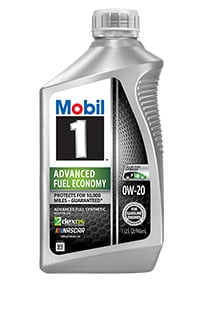
Mobil 1 Advanced Fuel Economy
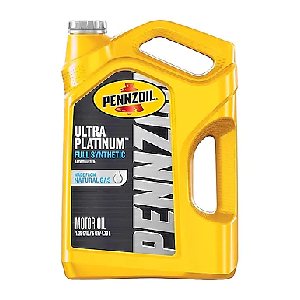
Pennzoil Ultra Platinum
The fuel economy differences between Mobil 1 and Pennzoil comes down to marginal differences that are difficult to measure in real-world driving.
Mobil 1 is generally credited with a slight fuel economy advantage; because of its optimized friction modifiers and viscosity stability across temperature ranges. However, the difference is small enough that you can think of it as “splitting hairs.” You’d need several hundred thousand miles of driving to notice any meaningful impact on your fuel costs.
Pennzoil might prove beneficial for high-performance cars. It runs some of the thinnest oils, which reduces internal friction and pumping losses. Thinner oils at operating temperature reduce parasitic losses from oil drag on moving components.
Don’t be surprised if you see forum debates claiming one oil definitively beats the other for fuel economy. The reality is that both oils are engineered for low friction, and the measurable difference between them falls within normal testing variation. Your driving style, maintenance habits, and tire pressure will affect your fuel economy far more than choosing between these two oils.
Related: Pennzoil Vs Castrol: Head-To-Head Comparison
Changing Interval
The Winner: Mobil 1
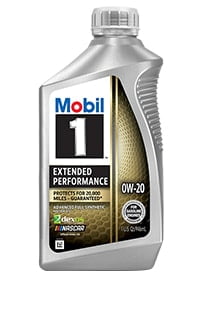
Mobil 1 Extended Performance Motor Oil
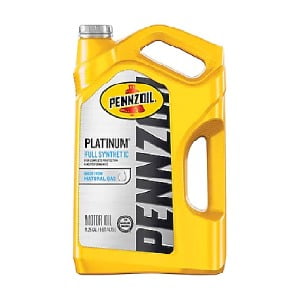
Pennzoil Platinum Full Synthetic Motor Oil
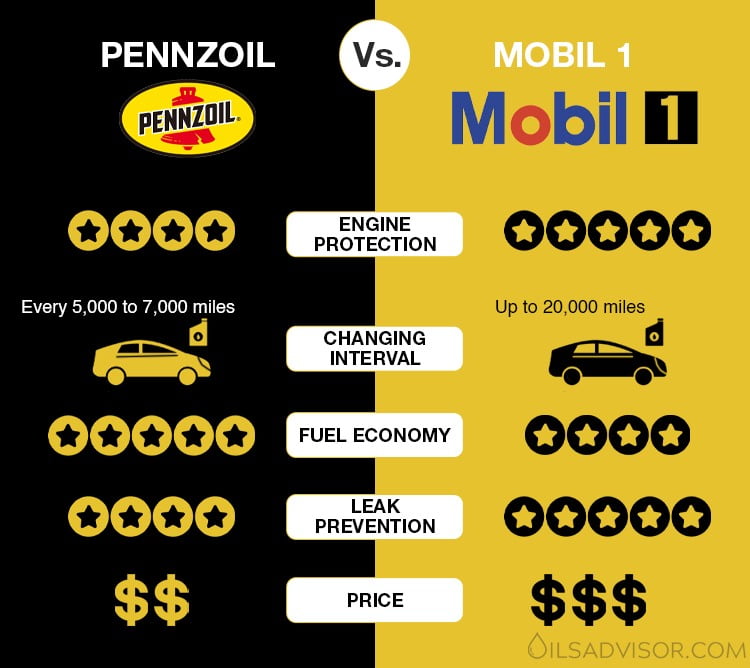
High-quality synthetic oils have made the old 3,000-mile change interval obsolete for most applications. Many users consider a 5,000-mile interval overkill when running a major brand full synthetic. General recommendations for synthetic oils suggest 7,500 miles or 12 months, whichever comes first.
Mobil 1 offers products specifically designed for very long drain intervals. Mobil 1 Extended Performance is rated for up to 20,000 miles with the appropriate oil filter. You will see minimal degradation even at these extended intervals.
Standard Mobil 1 formulations also go long. Drivers running Mobil 1 Extended Performance 5W-30 report that 8,000-mile changes feel wasteful based on UOA results. Testing confirms that 8,000 to 10,000-mile intervals are solid for typical driving conditions. One sample of Mobil 1 5W-30 measured 11.1 centistokes after 6,000 miles, still maintaining a firm “30 weight” viscosity.
Pennzoil Platinum and Ultra Platinum deliver excellent durability, but the interval you can safely run depends significantly on which specific grade you’re using.
Drivers running Pennzoil Ultra Platinum typically change oil every 7,500 miles without issues. One driver running Pennzoil Platinum 5W-30 changed at 10,000 kilometers (roughly 6,000 miles) and noted the oil looked like it could easily run longer based on color and condition.
However, specific viscosity concerns exist with certain grades. Analysis of Pennzoil Ultra 0W-40 after 5,700 miles showed the oil had dropped below the minimum viscosity specification for an xW-40 grade. This means it technically fell out of grade before reaching what most would consider an extended interval. If you’re running Pennzoil Ultra 0W-40, you should monitor viscosity more closely and consider shorter intervals than you would with other Pennzoil grades or comparable Mobil 1 products.
Driving conditions matter significantly with Pennzoil. For severe-use driving like stop-and-go city traffic, consider reducing intervals to 3,000 miles even with Pennzoil Platinum. For highway use covering 6,000 miles or more, there’s less concern about longevity. The GTL base oil resists thermal breakdown well under steady-state highway conditions.
Synthetic base oil molecules don’t actually wear out. What gets depleted is the additive package: the detergents, dispersants, anti-wear compounds, and antioxidants that keep your engine clean and protected.
Used oil analysis of Pennzoil Ultra 5W-30 after 5,562 miles showed enough remaining additive capacity to safely extend the interval by another 2,000 miles. The base oil was still in excellent condition, but the additives were being consumed at a measurable rate.
Mobil 1 Extended Performance is specifically formulated with a boosted additive package designed to last 15,000 to 20,000 miles. Standard Mobil 1 and Pennzoil products use additive packages calibrated for more typical intervals of 7,500 to 10,000 miles.
If you want to maximize drain intervals, Mobil 1 Extended Performance is the clear choice with proven performance at 15,000-plus miles. Standard Mobil 1 formulations safely handle 8,000 to 10,000 miles in most applications. Pennzoil Platinum and Ultra Platinum perform well at 7,500 to 10,000 miles depending on grade and driving conditions.
Engine Protection
The Winner: Mobil 1
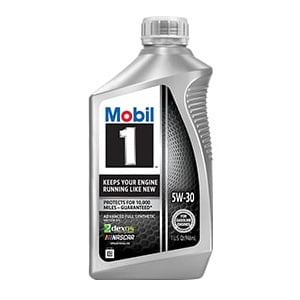
Mobil 1 Full Synthetic Motor Oil
Pennzoil Platinum Full Synthetic Motor Oil
Both Pennzoil and Mobil 1 deliver excellent engine protection, with specific strengths that matter depending on your application.
Pennzoil Ultra Platinum uses PurePlus Technology to synthesize base oil from natural gas, producing exceptionally clean molecules with minimal impurities. This translates to superior piston cleanliness and strong wear protection under high stress. Testing shows Pennzoil sometimes outperforms racing oils in wear reduction. The company backs this with a 500,000-mile engine protection guarantee when exclusively using their products.
Pennzoil’s lower NOACK volatility reduces intake valve deposits, which is particularly important for direct-injection engines. Some drivers report quieter operation and better oil consumption control with Pennzoil compared to Mobil 1.
Mobil 1 Extended Performance emphasizes advanced PAO-based synthetics with boosted additive packages designed for extended intervals and thermal stability. Film strength testing shows Mobil 1 5W-30 measuring 117,799 psi versus Pennzoil Platinum’s 99,949 psi, indicating superior boundary lubrication during extreme pressure events.
Mobil 1 maintains thicker operating viscosity, beneficial for turbocharged engines prone to oil shearing. The brand offers specialized formulations for diesels, classics, motorcycles, and hybrids. For typical daily driving, either oil provides excellent protection.
Leak Prevention
The Winner: Mobil 1
Mobil 1 Full Synthetic Motor Oil
Pennzoil Platinum Full Synthetic Motor Oil
Pennzoil High Mileage includes seal conditioners that work by gently softening dried or hardened seals. This helps reduce both external leaks and internal oil consumption from worn valve guide seals or piston rings. The conditioning agents gradually restore some flexibility to rubber seals that have become brittle from heat cycling and age.
Mobil 1 High Mileage uses similar seal conditioning technology but with additives that cause seals to swell slightly, filling gaps that develop as seals shrink over time. Some formulations also use higher viscosity base oils, which provide both improved sealing at worn surfaces and stronger high-temperature protection.
For dedicated leak protection and seal conditioning in older engines, Mobil 1 High Mileage is generally regarded as the better choice. Pennzoil High Mileage is also effective but often considered marginally less advanced in this specific area. Both products vastly outperform conventional oils for maintaining seal integrity in high-mileage applications.
Price
The Winner: Pennzoil
Mobil 1 Full Synthetic Motor Oil
Pennzoil Platinum Full Synthetic Motor Oil
Pennzoil and Mobil 1 are both premium synthetic oils, but Pennzoil typically costs less when comparing equivalent products.
Pennzoil Ultra Platinum is priced noticeably lower than ultra-premium competitors like Amsoil and generally undercuts Mobil 1 Extended Performance when comparing five-quart jugs. Pennzoil’s product line spans from budget-friendly conventional oils through synthetic blends to full synthetics, offering entry points at multiple price tiers.
Mobil 1 Extended Performance is priced competitively for a premium full synthetic, often only marginally more expensive than conventional oils when purchased in larger volumes. Their specialized formulations for high mileage vehicles, hybrids, European cars, diesels, and classic cars command slight premiums over the standard Extended Performance line.
The price difference between equivalent products isn’t dramatic. Pennzoil Ultra Platinum generally offers better value when comparing premium full synthetics. Mobil 1’s premium pricing reflects its established reputation and extensive application-specific lineup.
Both brands frequently run promotions and rebates that can shift the value equation. The practical advice is to buy whichever brand meets your specifications and is cheaper at the time of purchase.
Related: Valvoline Vs Mobil 1: Head-to-Head Comparison
Pennzoil Platinum Vs Mobil 1: Detailed Comparison
About Pennzoil Platinum
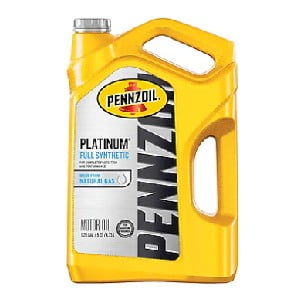
Pennzoil Platinum Full Synthetic Motor Oil
Pennzoil Platinum uses PurePlus Technology, a gas-to-liquid process that converts natural gas into a full synthetic base oil. Because it starts from natural gas rather than crude oil, the base is exceptionally pure with fewer impurities than conventional synthetic oils.
The crystal-clear base oil is paired with high-performance additives to deliver what Pennzoil calls “complete protection.” In practical terms, this means cleaner pistons (up to 40% cleaner than the toughest industry standard requires), protection against power loss, and superior wear protection. You’ll also see better fuel economy compared to a dirty engine, on average an extra 550 miles per year based on mixed driving conditions.
Temperature performance: Pennzoil Platinum flows quickly in cold starts and maintains protection in extreme heat, making it suitable for all driving conditions.
Key specifications:
- Viscosity: 5W-30
- API: SN-RC (and all previous categories)
- ILSAC: GF-5
- ACEA: A1/B1, A5/B5
OEM approvals:
- Chrysler MS-6395
- Ford WSS-M2C929-A, WSS-M2C946-A
- GM dexos1 (license GB1A0703014)
- Honda/Acura HTO-06
Pennzoil Platinum can be mixed with other synthetic and mineral oils, though you should always follow your manufacturer’s recommended drain intervals. The company backs this oil with a 15,000-mile protection guarantee and a 15-year/500,000-mile warranty. Take caution to balance these marketing claims against your specific driving conditions and OEM recommendations.
Always verify your owner’s manual for the correct viscosity grade and performance requirements before use.
Pros
- Does an excellent job of cleaning pistons (pistons are 40% cleaner)
- Better fuel economy
- Reduced engine noise
- Performs perfectly in extreme temperatures
- Designed to prevent LSPI (Low Speed Preignition)
- Maintain the consistency of your engine’s horsepower and torque
Cons
- Improper disposal can be hazardous to the environment
About Mobil 1
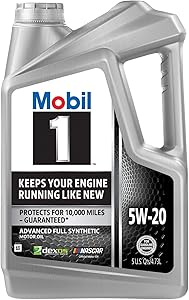
Mobil 1 Full Synthetic Motor Oil
Mobil 1 5W-20 is a full synthetic engine oil built with proprietary synthetic basestocks and a balanced additive package. ExxonMobil specifically recommends this 5W-20 viscosity for many Honda, Ford, and Chrysler vehicles, and it comes as factory fill in select high-performance applications.
Mobil 1’s advanced synthetic formula prevents deposits and sludge buildup while delivering strong wear protection across different driving styles. The thermal and oxidation stability means it maintains performance throughout the full oil change interval recommended in your owner’s manual. This also allows the viscosity to remain stable even as the oil ages.
Its strong low-temperature flow enables quick cold starts and fast protection. The oil maintains protection in high heat as well.
Key specifications:
- Viscosity: 5W-20
- API: SN, SM, SL, SJ (also CF diesel rating)
- ILSAC: GF-5
- Ford: WSS-M2C945-A (meets), WSS-M2C930-A (quality level)
OEM approvals:
- GM dexos1 Service Fill (license GB1C0927015)
- GM 6094M (quality level)
Mobil 1 5W-20 works in all modern gasoline engines where this viscosity is recommended, including turbocharged, supercharged, and multi-valve fuel-injected engines in passenger cars, SUVs, light vans, and trucks. It’s not recommended for two-cycle or aviation engines unless specifically approved by the manufacturer.
The enhanced frictional properties can aid fuel economy, though real-world results depend on your driving conditions and engine design.
Pros
- Long-lasting engine protection
- Extreme temperature tolerance
- Has an excellent cleaning ability
- Protects the engine from wear and tear
- Enhances oil breakdown resistance
- Improved resistance to harmful deposits and sludge
- Keep emission systems running efficiently.
Cons
- Mobil 1 motor oil is incompatible with diesel.
Related: Mobil 1 High Mileage Vs Extended Performance Vs Advanced Fuel Economy: A Gimmick Marketing?
Final Words
Both Pennzoil Platinum and Mobil 1 deliver solid synthetic performance, but they’ve built their reputations on different strengths. Pennzoil advocates point to the PurePlus Technology and its documented results in piston cleanliness and deposit control. Mobil 1 supporters emphasize the brand’s proven track record in extreme conditions, oxidation resistance, and consistent performance across a broader temperature range.
The reality is that both oils meet stringent industry standards (API SN, ILSAC GF-5) and carry major OEM approvals. Your choice matters less than using the correct viscosity grade for your engine and following your manufacturer’s drain intervals.
Check your owner’s manual first. If your vehicle requires specific approvals like GM Dexos 1 or Ford WSS-M2C945-A, both oils have you covered.
If you’re deciding between them, consider your priorities: Pennzoil emphasizes cleanliness and comes with aggressive warranty backing, while Mobil 1 leans on decades of high-performance testing and temperature stability. Either way, consistent oil changes with a quality synthetic will serve your engine far better than chasing marginal differences between premium brands.
Which is your favorite brand? Share with us your thought and experience in the comment box below!
Related Reads
- Valvoline vs. Pennzoil Face-off: Narrowing Down the Best Engine Oil Compare the top two oil brands to understand the strengths and weaknesses of Pennzoil and Mobil 1 – Learn more.
- 5w20 Vs 5w30: Head to Head Comparison Discover how different oil viscosities, such as 5w20 and 5w30, perform to better understand the distinctions between Pennzoil and Mobil 1 – Read more.
- Mobil 1 High Mileage Vs Extended Performance Vs Advanced Fuel Economy: A Gimmick Marketing? Dive into the specifics of Mobil 1’s product lines to see how they stack up against Pennzoil offerings – Find out more.
- Liqui Moly vs. Mobil 1 – Which is the Better Option? See how Mobil 1 compares to another top brand, Liqui Moly, for additional context when choosing between Pennzoil and Mobil 1 – Explore here.
- Best Oil for Honda Odyssey In 2022 Learn about the best oils for the Honda Odyssey, comparing how Pennzoil and Mobil 1 fit into the recommendations for this popular vehicle – Discover now.