
As a car owner, educating yourself about everything related to motor oil is necessary. However, several motor oils exhibit similar names, which makes it very difficult to choose the right one.
For instance, 5w20 Vs 5w30 are types of motor oils that are way too different, but you may get confused in picking the right one.
If you are in that case, this article helps you unfold the difference between 5w20 and 5w30 regarding the application, fuel economy, performance, etc.,. Then, you can easily use a suitable grade oil for your vehicle.
Let’s dive in!
Concepts Of The Oil Numbers
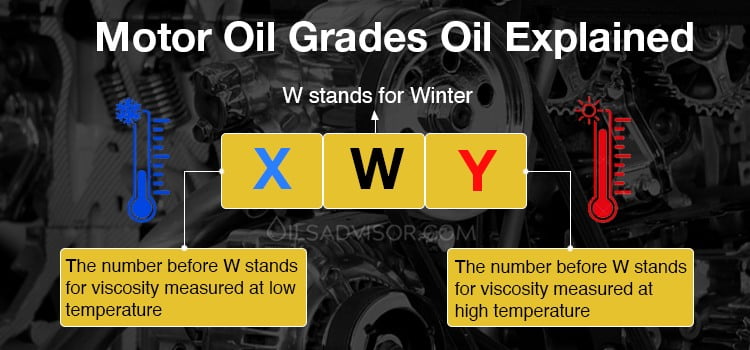
W, The Number Before & After
You may notice “W” mentioned on the labels of oil bottles. The “W” stands for winter. The number written before “W” in the motor oil type signifies a cold-weather viscosity below -30 degrees. This number represents the viscosity and thickness present in the motor oil.
If the number is lower, your oil will be less viscous at low temperatures. For instance, a 5W- motor oil will drop better at cooler temperatures than a 10W- motor oil. The more significant number, written after the “W,” indicates hot weather viscosity. This means how the motor oil will flow in hot weather (40ºC). The higher the number is, the thicker the oil gets.
Viscosity Index
The viscosity index (VI) is a measurement of a fluid’s change in consistency (thickness or thinness) with the temperature fluctuation. Viscosity Index is applied to define the coherence performance of motor oil in different weathers. The higher the number is, the more stable the viscosity remains over temperature fluctuations.
5w20 vs 5w30: Key Things In Common
5w30 and 5w20 are very similar, and the main two elements that are alike in both motor oils are:
- Both engine fluids are multi-grade oil, indicating that both products can be used in high and low temperatures. The multi-grade oils can serve throughout the year. The multi-grade oils can be identified by the standard SAE levels on the tags.
- 5W is another similar property that you can see in both products. The number “5w” signifies winter fitness up to a specific extreme.
5w20 vs 5w30: Head to Head Comparison
Key Features
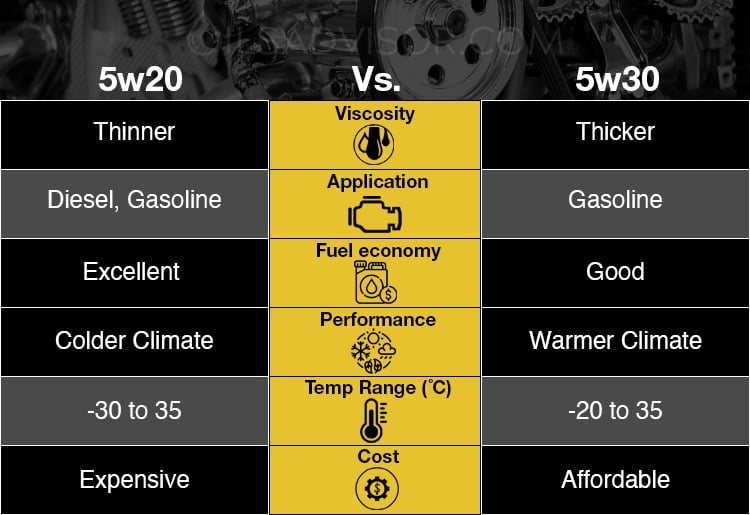
5w20 has a lower viscosity than 5w30. Thus, 5w20 will flow more smoothly than 5w30. However, when you run your vehicle, you can see the difference. At 100℃, 5w30 is slightly more vicious than 5w20. That’s why 5w30 is a better choice for warm weather while 5w20 is preferable for lower and colder environments.
5W20 oil tends to be lighter or less persistent as it features a low consistency. Living in colder climates, say up to 30℃ (86℉), 5w20 is ideal for your vehicle. After using this oil, I want to highlight that it provides less resistance throughout the motor parts: valve train, pistons, and crankshaft. This also helps improve fuel efficiency. Another interesting part for me was that 5w20 makes the oil easily pumped from the oil pan to the rest of the engine. If you are looking for engine oil with synthetic base properties, then 5w20 will serve you with its additive system element. The numbers and letters in 5w20 indicate the thickness or the density and the mass of the motor oil.
5w30 is a multi-grade oil with higher viscosity of grade 30. One standout feature which needs attention is that this oil is often utilized in diesel engines, gasoline engines, and light-duty petrol. In contrast to 5w20, 5w30 motor oil is fitter for hotter temperatures. After using the 5w30, I noticed that it produces greater impedance as well as more resistance. So, I would suggest you give some time before lubricating car engine parts in cold weather. 5w30 is thick, and thus overall assurance of car engine parts and better execution is assured.
Related: 0W20 Vs 5W20: Detailed Comparison
When to Use
To know when to change your engine oil, it is a must to view the manual provided by your manufacturer. The manual is the guide that contains all the instructions on how, when, and why to change your engine oil. Moreover, you will understand what particular type of oil you must use for your car.
5w20
5w20 comes with a lower viscosity. If you are living in colder areas, then 5w20 will be a reliable choice for you. The fluid will help you heat up your engine faster in this kind of weather.
5w30
Ensure to understand which oil will work better in particular temperatures. For a hot region, choose 5w30 motor oil because it has high viscosity. 5w30 serves well under high temperatures and will thus give more refined motor strength.
Fuel Economy
The test oil’s fuel performance is examined to examine the performance of fuel regarding a reference oil in the Sequence VI-B test. 5w20 oil with lesser viscosity has tremendous fuel energy than a more viscous oil 5w30. 5w30 oil is fully counterfeit oil, and is somewhat costly than 5w20 oil; also, its shield on a car’s engine is better than 5w20 oil.
Compatibility
5w20
The 5w20 is a low viscosity motor oil, and it goes with most of the vehicles, including imported models, car models, and GM cars. This engine is well-suited with the cars that we normally use; however, if you own a truck, van, or commercial vehicle, this won’t be an ideal choice.
5w30
5w30 is one of the most reliable turbine oils, which works well with a diversity of vehicles with several engine types. The oil can also cover a diverse range of temperatures, but mostly, it is suitable for warm climates. Most of the time, it works well, irrespective of the vehicle and the temperature.
If you are looking for a thin consistency due to jamming in the engine parts, go with the 5w20. Both oils are perfect to use in hot and cold weather and can be used with a wide array of vehicles. However, you can make selections based on the manufacturer’s recommendations.
Recommendation
Mobil 1 Advanced Full Synthetic Motor Oil 5W-20
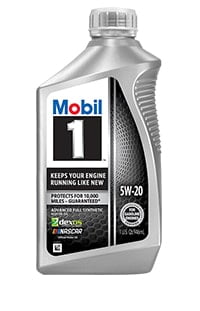
Mobil 1 Advanced Full Synthetic 5W-20
Mobil 1 technology originates as typical equipment in numerous diverse cars, including select high-performance vehicles. Mobil 1 5W-20 is a high-motor oil for all kinds of vehicles where this viscosity is suggested.
The engine oil is best in rendering exceptional internal engine heat stability. You can use the product if you reside in hotter temperatures where the engine hit could touch up to 500℉. Additionally, the product will protect in temperatures below -30℉ . The product tends to increase engine longevity by fighting to block damaging heaps and residue accumulation.
Mobil 1 Advanced Full Synthetic Motor Oil 5W-30
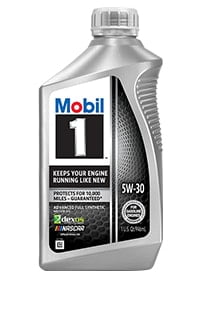
Mobil 1 Advanced Full Synthetic Motor 5W-30
5W-30 aids to encompass motor life for vehicles. Mobil 1 Advanced Full Synthetic Motor 5W-30 motor oil aims to supply exceptional engine shields from factors that can impair locomotives. This motor oil formulation delivers excellent internal engine heat defense (up to 500 ℉ ) and low-temperature (to -30℉ ), supporting quick cold-weather preliminary and ultra-fast fortification.
The lubricant serves to preserve decisive motor parts for up to 10,000 miles between oil adjustments. 5w30 is best in regulating oxidation to limit oil breakdown and securing the highest thickness. The engine oil is developed using ILSAC GF-6 measures to provide low-speed pre-ignition (LSPI), and timing series wear security while maintaining your motor clean and improving your fuel economy.
Related: 5w30 Vs 10w30: Detailed Comparison
How to Choose The Right Oil Type
- The temperature level of your environment
It is important to acknowledge certain factors while picking a particular type of viscosity oil.
As mentioned above, the level of temperatures you are residing in plays a vital role in selecting a specific type of motor oil. If you are running a vehicle in a hot area with a temperature as high as 40℃ (104℉), choose 5w30 motor oil. 5w30 works excellently under high temperatures and will thus provide more excellent motor protection.
But, if you live in cold temperatures as low as -10 ℃ (14℉) , thinner oil is a better choice as it warms up instantly. So, for lower temperatures, 5w20 will be a more secure choice for you, and for higher, go with 5w30.
- Read the description in the manual of your car’s engine.
If you are not sure about when to change the motor oil or how to check the oil, it is better to go through the manual and read all the information given by the original manufacturer. By following the manual, your vehicle’s engine will stay well-lubricated and function adequately.
Bottom Line
5w20 and 5w30 are synthetic engine oils that make both oils very flexible. These motor oils serve fairly well to preserve your vehicle’s motor despite the weather. However, if you still perceive yourself questioning which engine oil to prefer among 5w20 vs. 5w30, I suggest you go with 5w30.
After using it personally, I can say that 5w30 oil has high transparency and shear intensity instead of 5w20 and further performs sleekly despite the vehicle and the heat.
How about you? Which is your favorite oil grade? Share with us your experience in the comment box below!
Related Reads
- 10w-40 or 5w-30: What’s the Best Choice? Unravel the Facts Compare 10w-40 and 5w-30 to understand how oil viscosity impacts engine performance, similar to the 5w20 vs 5w30 debate – Learn more.
- SAE 30 Vs 5w30: Underline The Difference Explore the differences between SAE 30 and 5w30 to get a better understanding of how these oil grades affect your engine, just like 5w20 vs 5w30 – Read more.
- 0W20 Vs 5W20: Detailed Comparison Compare 0W20 and 5W20 oils to see how they stack up against each other and how they relate to choosing between 5w20 and 5w30 – Find out more.
- Mixing 5w30 and 10w30 Motor Oils: Effects and Safety Explained Learn about the effects and safety of mixing different oil grades, which can inform your decision on using 5w20 vs 5w30 – Explore here.
- Valvoline vs. Pennzoil Face-off: Narrowing Down the Best Engine Oil Discover how Valvoline and Pennzoil oils compare, offering insights into the performance of 5w20 and 5w30 oils – Discover now.



Pingback: 0w20 Vs 5w20: Detailed Comparison - Oils Advisor
Pingback: 5w30 Vs 10w30: Detailed Comparison - Oils Advisor