Every time you start the vehicle’s engine, it roars to life, enhancing your driving experience. But behind the curtains, a silent worker is working tirelessly to keep the mechanical performance of your engine at its best – motor oil. We all have heard the advice, “Change your vehicle’s oil regularly!” But when you see motor oil brands lining the shelves, you often end up scratching your head, unsure about the best choice for your vehicle. Don’t worry, we all have been there. A trustworthy name with years of history stands out – Quaker State Oil. So, how would you know if Quaker State is a real deal? Wear your seat belts as we are about to reveal the secret of Quaker State Oil if it is a perfect match for your ride.
Analyzing Quaker State Oil
Quaker State is a well-reputed motor oil brand with years of experience in the field providing quality. It has various options of motor oils designed for different engines and driving conditions. In order to find if Quaker State is suitable for your vehicle, consider a few main points, such as the vehicle’s model, manufacturing, recommended oil viscosity, specifications, needs, and driving habits. It is necessary to ensure the performance of the engine and endurance. Quaker State continues to prove its worth as a trusted and dependable motor oil brand.
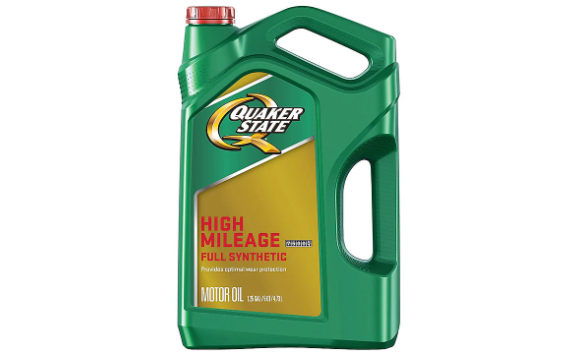
Quaker State Motor Oils
Quaker State has opportunities to include eco-friendly choices to enter new markets. Contrary to that, the industry is highly regulated, which may give a tough time to the company. With strategic product diversification and market expansion, Quaker State has the potential to increase its brand strength and leverage growth opportunities.
Range of Viscosities
Quaker State has a wide range of motor oil viscosities. There is an appropriate motor oil option for every vehicle to ensure the needs of various engines and driving conditions.
- Low Viscosity
Quaker State has 0W-20 and 5W-20 in low-viscosity motor oils. Ideal for modern, fuel-efficient, and fuel-economical choices. These oils operate well in colder climates.
- Medium Viscosity
A versatile range, 5W-30 and 10W-30, are suitable for moderate climates, striking a balance between performance in cold and hot weather conditions.
- High Viscosity
10W-40 and 20W-50 are recommended for older vehicles or to operate in warmer climates. It is the best choice in high-mileage engines, offering thick oil film protection at high temperatures.
High-Performance Options
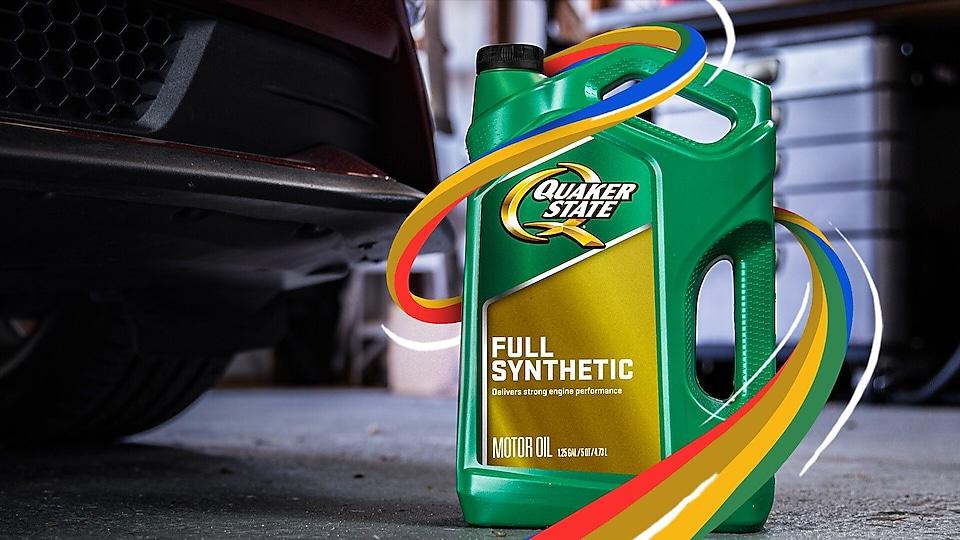
Quaker State recognizes the requirements for high-performance engines to withstand extreme conditions and deliver optimal results. They offer a range of motor oils tailored according to the demand:
- For Track and Racing Performance: This oil range ensures maximum protection and reduced friction, making it ideal for high-speed track applications.
Quaker State has got your back with its Full Synthetic Motor Oil
- Off-Road and Heavy-Duty: Quaker State has tailored oils to withstand high loads and rugged conditions, perfect for off-road vehicles and heavy-duty equipment.
SAE 30 Heavy Duty Motor Oil is the best option
- Extended Performance: These oils are specially engineered to increase the oil change interval with maintained peak engine protection. For extended performance, Quaker State High Mileage Full Synthetic 5W-20 Motor Oil is here for your help.
Specialized Viscosities
- Viscosity grades like 10W-40 and 20W-50 by Quakers State are for high-performance engines with added protection.
Consumer Experience
Consumers’ overwhelming response appreciates the quality and reliability of Quaker State. Positive reviews highlight improved engine performance, reliability, long-term usage benefits, enhanced fuel efficiency, and economical choice among motor oils. A few negative reviews were about the difference in labels on ads and bottles. Ad descriptions mentioned synthetic blends, but the label on the bottle had no reference to the synthetic blend. Negative reviews help improve the quality and customer experience.
Warranty Program
Quaker State offers a comprehensive warranty program, typically covering engine damage caused by oil-related issues. The free Quaker state lubrication limited warranty is applicable on all products. If the consumer has covered 10 years or 300,000 miles and is using Quaker State oil products exclusively, the warranty protects 15 key parts of the engine, such as pistons, valve stems, and camshafts. Warranty costs up to $3,000. If someone claims a warranty, the claim value is limited to $5,000 or the actual cash value of the vehicle. In order to maintain a warranty program, one has to follow suggested schedules for oil changes and maintenance.
Care and Maintenance
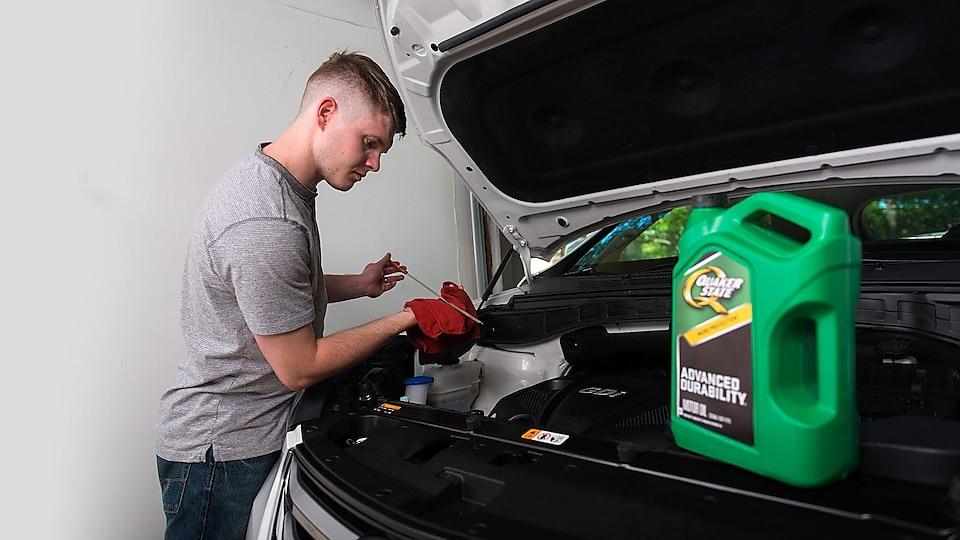
Proper care and maintenance are necessary for the longevity and performance of the engine as well as to get more benefits from this motor oil. Follow the recommended oil change intervals, such as official guidelines for the product. Keep checking on the engine oil level to ensure it is within the recommended range. Go for high-quality oil filters to keep your oil clean. Beyond oil changes, follow the manufacturer’s guide for a maintenance schedule, including air filter replacement and spark plug checks.
Environmental Considerations
Shell parent organization that owns the Quaker State has aimed to become a net-zero emission energy business by 2025. This powering program consists of four values:
- Generating Shareholder
- Achieving net-zero emissions
- Powering lives
- Respecting Nature
This program allows opportunities for energy transition. They aim to balance the emissions produced with an equivalent amount of emissions removed from the atmosphere.
Emission reduction
Emission reduction means reducing greenhouse gas emissions by implementing strategies to lower carbon footprint. At the same time, they strive to support ideas that remove equivalent amounts of Carbon dioxide from the atmosphere.Lower emissions will contribute to the presentation of our ecosystem. The emission of harmful pollutants from the air will help improve the air quality index, ultimately resulting in fewer respiratory diseases. The reduced greenhouse gas emissions will help in the release of harmful gases that contribute to global warming. The frequency of natural disasters like floods, droughts, and hurricanes will also reduce.Transitioning to renewable energy sources, improving energy efficiency, and adopting sustainable practices can help to achieve a sustainable and environmentally friendly future for Earth. The goal is to get maximum climate change impact through activities like reforestation or carbon capture and storage.
Comparison between Quaker State and Others
Quaker State has firmly established itself as a trustworthy, reliable contender in a competitive Market. It competes head-to-head with other industry giants. Its quality performance has been praised by loyal customers, who appreciate the motor oil for its commitment to high-quality engine oil products and longevity. While it’s market competitors offer a wide range of options, it stands out in affordability and accessibility, as it provides premium-quality motor oils to a broad range of drivers.
In the world of choices, Quaker State owns the trust of its users. With a legacy of quality, dedication, commitment to performance, and protecting your engine, Quaker State Motor Oils have earned the respect and hearts of drivers and are loved by their engines. So, when it comes to selecting motor oil for your vehicle’s needs, you can choose Quaker State without hesitation.
Related Reads:
- Valvoline vs. Pennzoil Face-off: Narrowing Down the Best Engine Oil Compare Quaker State to top contenders like Valvoline and Pennzoil to determine its superiority as an engine oil – Learn more.
- Liqui Moly vs. Mobil 1 – Which is the Better Option? See how Quaker State stands up against Liqui Moly and Mobil 1 in terms of performance and engine protection – Read more.
- Pennzoil Vs Mobil 1: Head-To-Head Comparison Understand the strengths of Quaker State compared to Pennzoil and Mobil 1 to decide if it’s the best choice for your vehicle – Find out more.
- Valvoline Vs Mobil 1: Head-to-Head Comparison Discover how Quaker State oil measures up to Valvoline and Mobil 1, two of the leading brands in engine oil – Explore here.
- Unveiling the Secrets of Engine Oil Blending: Can You Mix 5W-20 and 5W-30? Learn about the blending properties of Quaker State and its effectiveness in mixed oil scenarios like 5W-20 and 5W-30 – Discover now.