Skip to content
Toyota’s Genuine ATF WS specification came out in 2002. You’ll also see it referenced as JWS3324 or NWS9638 in technical documentation. JWS3324 or NWS9638 are essentially the same so don’t get confused when you shop around for a WS ATF for your Toyota. Why they’re referred to differently, only Toyota has the answer.
The “WS” designation stands for World Standard. Toyota developed this specification to create a single, unified automatic transmission fluid across all global markets.
About Toyota WS ATF Specs
Toyota WS ATF is a slip-controlled automatic transmission fluid characterized by significantly lower viscosity compared to the older TYPE T-IV fluid. This formulation is Toyota’s initiative to standardize their fluid requirements worldwide and improve fuel efficiency.
Toyota and Lexus vehicles from the mid-2000s onward generally require Toyota WS fluid across almost all categories: trucks and SUVs like the Tundra, 4Runner, and Land Cruiser; vans like the 2006+ Sienna; and passenger cars such as the Camry, Corolla, and Yaris.
This also extends to their hybrids and luxury models, since most use AISIN-WARNER automatics or CVTs engineered specifically for the low-viscosity WS specification (e.g., Prius, Camry Hybrid, GX460, LX570).
Keep in mind that WS fluid is not backward compatible with previous Toyota fluids like ATF Type T-IV or DEXRON ATF. Toyota explicitly warns in service manuals that using transmission fluid other than Toyota Genuine ATF WS may cause abnormal noise, vibration, or transmission damage.
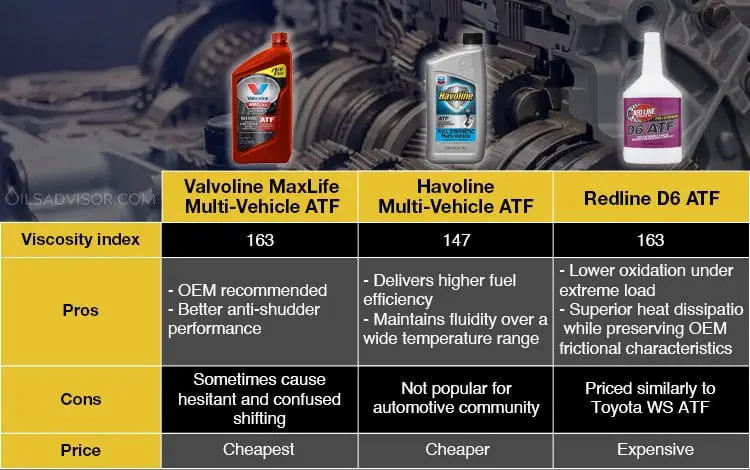
However, you can find good substitutes for Toyota WS transmission fluid from brands like Valvoline, Halvoline, and Redline.
Toyota WS Transmission Fluid Alternative
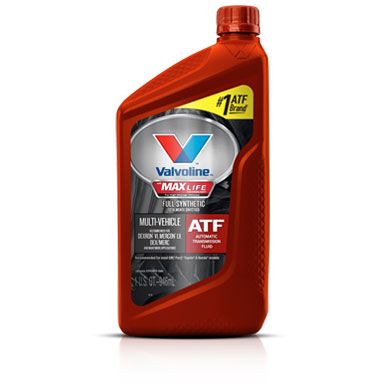
Valvoline Multi Vehicle ATF

Halvoline Full Synthetic ATF

Red Line D6 ATF
Before listing the best alternative fluids to substitute Toyota WS, it is crucial to note that using aftermarket engine oils is liable to void the warranty on your new car. It is advisable to use non-OEM oils when your vehicle is no longer under the original OEM warranty coverage. Now, here are the best Toyota WS equivalent out there.
Read more: Toyota Super Long Life Coolant Equivalent
Valvoline MaxLife Multi-Vehicle ATF
Valvoline MaxLife Multi-Vehicle ATF
Besides, with many positive reviews by users on Bobistheoilguy and Tacomaworld forums, this fluid is most cost-efficient equivalent option to your WS fluid.
Valvoline MaxLife Multi-Vehicle ATF is a fully synthetic transmission fluid compatible with Toyota WS and dozens of other automatic transmissions. It’s designed as a universal aftermarket alternative for higher-mileage vehicles, though it’s not an OEM-licensed product.
MaxLife ATF is formulated with advanced additives targeting the main causes of transmission breakdown in older vehicles: leaks, varnish buildup, and shifting problems. The synthetic base provides better flow at low temperatures and stronger film protection at high temperatures compared to conventional fluids.
Valvoline claims to formulate MaxLife ATF to condition seals to help prevent leaks, reduce varnish formation, and deliver what Valvoline calls their best anti-shudder performance. It’s specifically engineered to maintain smooth shifting longer than conventional ATFs, especially for transmissions with 75,000 miles or more.
Valvoline has conducted internal testing, independent lab work, and field testing to support these claims, but again, Toyota hasn’t signed off on it. If you’re maintaining a 2010 Camry with 150,000 miles and doing your own fluid changes, MaxLife ATF represents a cost-effective option. For a newer Lexus still under warranty, the savings probably aren’t worth the potential hassle of explaining aftermarket fluid to a dealership if issues arise.
Compatibility:
Beyond just Toyota WS, MaxLife ATF covers other specifications, including:
GM: DEXRON VI
Ford: MERCON V and MERCON LV
Japanese/Korean:
- Honda DW-1
- Nissan Matic-S
- Hyundai SP-IV
European:
- Mercedes MB236 series
- BMW
- Audi/VW
- ZF applications
General Compatibility: Works in most conventional automatic transmissions from the 1990s onward.
- Made with premium additives to prevent leaks
- Formulated with full-synthetic base oils for smooth shifting, protection against wear
- Helps eliminate slippage/shudder
- Delivers impressive performance on various Toyota models at different temp levels
- Sometimes causes hesitant and confused shifting
- Can void your vehicle’s warranty
Valvoline MaxLife ATF Vs. Genuine Toyota WS
| Valvoline MaxLife ATF | OEM Toyota WS | |
|---|---|---|
| Viscosity Index | 163 | 154 |
| Specification | JWS 3324 | JWS 3324, NWS 9638, WS |
| Appearance | Red | Red |
| Pour Point (℉) | -43.6 | -49 |
| Price | Expensive | Cheaper |
Read more: Toyota T-IV Transmission Fluid Substitute
Redline D6 ATF

Redline D6 ATF
Red Line D6 ATF is a fully synthetic transmission fluid designed as an aftermarket equivalent to Toyota WS, along with GM Dexron VI, Ford Mercon LV, Honda DW-1, and several other OEM specifications. It’s Red Line’s lowest viscosity ATF, engineered for consistent operation across modern transmissions that require thinner fluids.
Redline D6 ATF uses a synthetic base with additives focused on shear stability. This allows the fluid to maintain its viscosity under stress better than conventional formulations. Red Line positions this as a direct replacement for factory fluids in vehicles specifying Toyota WS (part number NWS09638), which covers most Toyota and Lexus automatics from the mid-2000s onward.
Redline’s synthetic formulation provides reduced oxidation and lower volatility at high temperatures compared to OEM fluids. This translates to less varnish buildup on valves and clutches during extended high-temperature operation. Red Line claims this allows for extended drain intervals.
You can purchase Red Line D6 ATF via Amazon in quart, gallon, 5-gallon, 16-gallon, and 55-gallon containers.
Compatibility
Beyond Toyota WS, D6 ATF covers a wide range of specifications:
- GM Dexron VI (the most common modern ATF spec)
- Ford Mercon SP and LV
- Honda DW-1
- Nissan Matic-S
- Mercedes NAG-2 (MB Sheet 236.12 and 236.14)
- BMW transmissions using Dexron VI specifications
- ZF Lifeguard fluids (6, 6+, and 8)
JWS 3324 and AW-1 (the technical standards behind Toyota WS)
The only downside is the price. The product is more expensive than the Toyota WS. If you need a cheap alternative, it is not you best choice.
- Reduces oxidation and lower volatility at high temperatures
- Delivers excellent transmission performance without varnishing valves and clutches
- Balanced frictional characteristics extended drain intervals
- More expensive than OEM Toyota WS ATF
- Can void your vehicle’s warranty
RedLine D6 ATF Vs. Genuine Toyota WS
| Redline D6 ATF | OEM Toyota WS | |
|---|---|---|
| Viscosity Index | 163 | 154 |
| Specification | JWS 3324, NWS09638 | JWS 3324, NWS 9638, WS |
| Appearance | Red | Red |
| Pour Point (℉) | -76 | -49 |
| Price | Expensive | Cheaper |
Red Line D6 ATF vs. Valvoline Multi-Vehicle ATF
Red Line D6 ATF meets Toyota WS specifications explicitly, while Valvoline Multi-Vehicle ATF typically covers a broad range of applications. The D6 uses advanced PAO and POE synthetic base stocks for superior shear stability and oxidation resistance, whereas Valvoline relies on conventional mineral or basic synthetic formulations.
D6’s low-viscosity profile matches WS requirements precisely, delivering smooth, consistent shifts in transmissions designed for WS fluid. Valvoline’s higher viscosity and generic friction profile may produce less optimal shifting in WS-specific transmissions. However, it promises better protection for older engines because of its cleaning additives.
D6 provides high-level gear protection suitable for modern transmissions with tight tolerances, while Valvoline offers moderate protection adequate for broader applications. The trade-off comes down to precision versus practicality.
D6 commands a premium price but ensures OEM-level performance and supports extended drain intervals. Valvoline costs less and offers convenience for multi-vehicle households, though using it in a WS-specific transmission risks suboptimal performance.
HAVOLINE Full Synthetic Multi-Vehicle ATF

HAVOLINE Full Synthetic Multi-Vehicle ATF
Havoline Full Synthetic Multi-Vehicle ATF is a low-viscosity synthetic transmission fluid compatible with Toyota WS and approved by General Motors for Dexron VI applications. It’s formulated for modern 6+ speed automatic transmissions and exceeds JASO 1A-LV requirements. It’s suitable for most Japanese, European, and North American vehicles from the mid-2000s onward.
Havoline Full Synthetic Multi-Vehicle ATF is formulated with high-purity base stocks and designed specifically for the thinner fluid requirements of modern transmissions. Unlike many aftermarket multi-vehicle fluids, Havoline carries official GM approval (license number J-62103) for Dexron VI, which gives it credibility as a licensed OEM product for GM applications while remaining compatible with Toyota WS and dozens of other specs.
The advanced formula delivers excellent shift quality with high torque capacity throughout its service life, helping prevent clutch slippage and vehicle shudder. Long-lasting viscosity modifiers maintain viscosity and oxidation stability across a wide temperature range.
Havoline Full Synthetic Multi-Vehicle ATF fluid protects gears, bearings, clutch plates, seals, and bushings from wear while resisting foaming. Havoline claims improved fuel economy relative to conventional fluids due to lower viscous drag, and the oxidation resistance supports extended drain intervals.
Compatibility
Aside from being an aftermarket equivalent for Toyota WS, Halvoline Full Synthethic Multi-Vehicle ATF is compatible with several different specifications.
Officially Approved:
- GM Dexron VI (GMW16444, license J-62103) for 2006+ vehicles
- Backward compatible with Dexron, Dexron II, and Dexron III/IIIH
Meets Requirements:
- JASO 1A-LV (M315 performance standard for Japanese and Korean vehicles)
- Allison C-4
- Mercedes MB 236.41
- Voith H55.6335.3X
Compatible with:
- Toyota/Lexus Type T, T-II, T-III, T-IV, Type WS, JWS 3309, JWS 3324, NWS 9638
- Honda/Acura ATF Type 3.0, 3.1, DW-1, Z-1
- Nissan/Infiniti Matic D, J, K, S
- Ford Mercon, Mercon V, Mercon SP, Mercon LV (not officially licensed by Ford)
- Hyundai/Kia SP-II, SP-III, SP-IV, SP-IV-RR, SPH-IV, NWS-9638
- Mazda ATF FZ, M-III, M-V, Type T-IV, JWS 3309
- Mitsubishi ATF-J2, ATF-J3, SP-II, SP-III, SP-IV
- Subaru ATF, ATF-HP
- Mercedes MB 236.2, 236.7, 236.8, 236.10, 236.12, 236.14, 236.15
- BMW multiple part numbers including ATF 3+, ATF 6
- Volkswagen/Audi G 055 540 A2, G 052 533, G 055 025 A2, and other G-series specs
- ZF TE-ML 11A, 11B
- FCA/Stellantis ZF 8 and 9-speed transmissions
- Aisin AW-1, AW-2, JWS 3309, JWS 3324, ATF-OWS
Hybrid vehicles where the OEM specifies Mercon LV or Toyota Type WS
- Regulates friction for smooth and consistent performance
- Delivers impressive performance at all temperature levels
- Offers protection to gears, clutch plates, bearings, and seals
- Can void the warranty on new vehicles
HAVOLINE Multi-Vehicle ATF Vs. Genuine Toyota WS
| HAVOLINE Multi-Vehicle ATF | OEM Toyota WS | |
|---|---|---|
| Viscosity Index | 147 | 154 |
| Specification | JWS 3324, NWS09638 | JWS 3324, NWS 9638, WS |
| Appearance | Red | Red |
| Pour Point (℉) | -65 | -49 |
| Price | Cheap | Expensive |
Read more: Type A Transmission Fluid Equivalent
Frequently Asked Questions
Can I use aftermarket fluids like Valvoline MaxLife instead of Toyota Genuine ATF WS?
Yes, but with considerations. Aftermarket fluids like Valvoline MaxLife, Red Line D6 ATF, and Havoline Full Synthetic Multi-Vehicle ATF are formulated to be compatible with Toyota WS specifications.
However, some vehicle owners claim that using non-genuine WS fluid can cause torque converter shudder that only resolves after completely flushing the system and refilling with real WS fluid. If you’re maintaining a higher-mileage Toyota outside of warranty, aftermarket alternatives can save money.
Is Toyota WS fluid really “lifetime” or does it need changing?
Toyota initially claimed WS fluid had a 100,000-mile inspection interval and didn’t require changing during the vehicle’s life. However, Toyota’s own maintenance schedule requires replacement at 60,000 miles for severe duty conditions, which includes short trips, city driving, heavy loads, or trailer towing.
Can I mix Toyota WS with older Toyota fluids like Type T-IV or Dexron?
No. Toyota explicitly warns in service manuals that WS fluid is not backward compatible with previous Toyota fluids like ATF Type T-IV or Dexron ATF. Using the wrong transmission fluid may cause abnormal noise, vibration, or transmission damage. The viscosity differs significantly: WS runs about 23 cSt at 40°C, while older specifications ran thicker (some AISIN fluids were around 35 cSt at 40°C).
Which Toyota and Lexus vehicles require WS fluid?
Almost all Toyota, Lexus, and Scion vehicles with automatic transmissions from 2004 onward require WS fluid. This includes trucks and SUVs like the Tundra, Sequoia, 4Runner, Tacoma, and Land Cruiser; vans like the 2006+ Sienna; passenger cars such as the Camry, Corolla, and Avalon; and hybrid vehicles including the Prius, Camry Hybrid, and Highlander Hybrid. Most of these vehicles use AISIN-WARNER automatic transmissions engineered specifically for this low-viscosity fluid.
Check your owner’s manual to confirm, as the 2005 Sienna, for example, still called for Type T-IV before the transition to WS in 2006.
Can I use the same WS fluid in my power steering system?
No. While WS fluid is designed for automatic transmissions, power steering systems often require older fluids like Dexron II or III. The formulations are different, and using WS in your power steering system could cause problems.
Always check your owner’s manual for the correct power steering fluid specification for your specific vehicle.
Closing Notes
Toyota WS fluid was engineered in the early 2000s as part of Toyota’s environmental and fuel economy strategy. The specs anticipated the demands of hybrid drivetrains, lock-up torque converters, and electronically controlled shifting long before these features became commonplace.
The aftermarket fluids discussed here use full synthetic base oils and OEM-approved additives that deliver protection comparable to genuine Toyota WS. Other fluids promise better performance. But, if you need a cheaper, yet compatible fluid to use in place of the pricey OEM fluid, the Valvoline Maxlife ATF is a perfect pick.
Check Price at AmazonLet me know down in the comments which product is your favorite.
Related Reads
- Honda ATF DW-1 Equivalents: Best Alternatives and Substitutes Explore the best alternatives and substitutes for Honda ATF DW-1, offering insights into compatible options for Toyota WS transmission fluid – Learn more.
- Mopar ATF+4 Equivalent Discover suitable substitutes for Mopar ATF+4 to find high-quality alternatives for Toyota WS transmission fluid – Read more.
- Nissan Matic Equivalent [S, D, J, K] Find equivalents for Nissan Matic fluids to identify potential alternatives for Toyota WS transmission fluid – Find out more.
- Mopar ZF 8&9 Speed ATF Equivalent Learn about the best substitutes for Mopar ZF 8&9 Speed ATF, providing compatible alternatives for Toyota WS transmission fluid – Explore here.
- Kubota UDT Hydraulic Fluid Equivalent Discover alternatives for Kubota UDT hydraulic fluid, providing high-performance equivalents that can serve as Toyota WS transmission fluid alternatives – Discover now.
![Motorcraft Coolant Equivalent: [Orange & Premium Gold]](https://oilsadvisor.com/wp-content/uploads/2021/07/motorcraft-coolant-1024x576.png)