
K&N Air Filter Oil is specifically formulated to work with cotton gauze filter media. It’s a compound of mineral oil blended with special polymers that create an efficient tack barrier. The oil is deliberately sticky (tacky) so it quickly penetrates and saturates the filter pleats while remaining suspended in the fabric.
Don’t use substitutes like motor oil, transmission fluid, or other thin oils. Regular petroleum products aren’t sticky enough and will flow out of the cotton media, leaving the filter dry. Worse, K&N warns that petroleum products like transmission fluid and motor oil will soften and destroy the rubber sealing edges of the filter.
K&N Recharger kits include everything you need: PowerKleen degreaser and the proper air filter oil, available in either aerosol or squeeze bottle formats.
Instead, in this article, I’ll help you find the best substitute for your K&N air filter oil and how to oil the air filter in a simple way!
K&N Filter Oil: An Unbiased Review
The primary benefit of K&N oil is its role as a tacking agent. K&N developed it to remain suspended within thousands of microscopic cotton fibers found in the filter media. The oil is sticky and designed to grab fine particles of dirt and hold them until you clean the filter.
K&N filters rely on this oil to stop dirt. The cotton gauze media is designed to increase air flow, meaning that running the filter without oil allows too much dirt to pass through. The oil is essential to ensure air filtration efficiency and protect your engine.
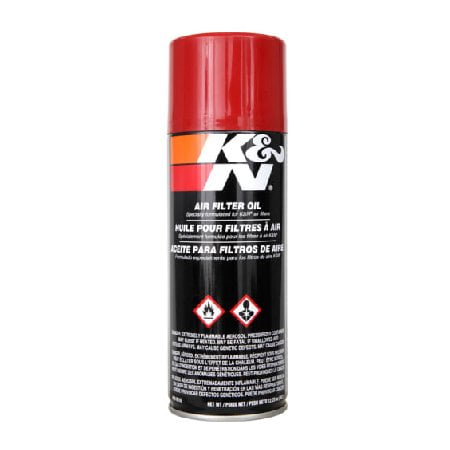
K&N Air Filter Oil
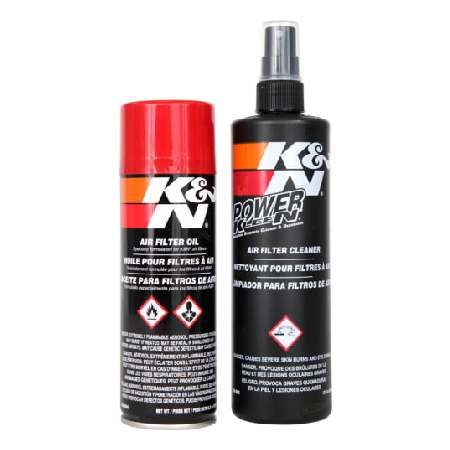
K&N Air Filter Cleaning Kit (Cleaner & Oil)
Mixed Views on K&N Filter Oil
K&N Air Filter Oil is the only oil specially formulated to work with the cotton fabric in their air filter elements. It’s a compound of mineral oil blended with special polymers, which form an efficient tack barrier.
The oil is purposefully extremely tacky to catch tiny dirt particles. The oil contains a red dye, which makes it easy to monitor the application and ensure a uniform red color is achieved across all pleats. K&N asserts that their oil does not come off the filter when used correctly.
K&N Air Filter Oil
However, some car owners argue that the performance gain is minimal and not worth the effort or risk. Some mechanics argue that drop-in filters for stock airboxes do literally nothing for performance. Critics claim that K&N filters let in 50% more particulates than OEM paper filters, which leads to long-term wear on the piston bore. Many mechanics universally recommend sticking with the stock paper filter.
Repair professionals also caution against MAF sensor contamination. If you over-oil the filter, excess oil can coat the Mass Air Flow sensor, causing it to fail or read incorrectly.
K&N officially denies that their oil comes off when properly absorbed, even under extreme airflow conditions. They blame failures on user error, specifically over-oiling the filter. Users who’ve run K&N filters for decades without MAF issues support this position.
Performance Highlights
- Simple to apply
- Offers superb protection
- Helps restore airflow efficiency
- Allows your K&N air filter to perform as if it were brand new
- Outperforms all other air filter oil in combating contaminants when used in conjunction with the K&N air filter
K&N Air Filter Oil Substitutes
K&N strongly recommends using only their proprietary air filter oil, but users and mechanics frequently discuss alternatives when the genuine product isn’t available.
K&N explicitly warns that petroleum products like motor oil and transmission fluid will soften and destroy the rubber sealing edges of the filter element. K&N cautions that using non-K&N oil compromises the specialized blend’s required properties for maximum flow and filtration.
User-Reported Substitutes
Despite the manufacturer’s warnings, users and mechanics have suggested several alternatives based on matching the required sticky consistency. Please note that these are not recommended substitutes. These are merely alternatives that some car owners come up with in a pinch.
Chainsaw bar oil is frequently mentioned as having an almost identical consistency and stickiness to genuine filter oil, making it the strongest alternative in a pinch. The clinginess of chainsaw bar oil closely mimics the properties K&N designed into their formula.
Heavy motor oil, specifically high-viscosity options like straight 30wt engine oil or heavy gear oil (90wt), is sometimes used, though users acknowledge these are less sticky than dedicated filter oil. The main drawback is that regular oil isn’t sticky enough and will drain off the filter by gravity.
Dedicated oil designed for other reusable filters, such as foam air filter oil sold at motorcycle shops (Bel-Ray or UNI filter oil), is also sometimes used. However, I advise against using oil meant for foam filters because it might be too thick for the cotton media, which can severely restrict air flow.
Other brands of fabric filter oils (like Maxima) are available and can be used on cotton media filters like K&N. Generic “Superflow” filter oil has also been mentioned as a similar product.
K&N lists WD-40 as a product not to use. WD-40 is considered too thin and is also highly flammable, making it unsuitable for air filter applications.
Gasoline, diesel, paraffin, and thinner are specifically warned against. These solvents can harm the cotton filter media and shrink and harden the rubber end caps, compromising the filter’s seal.
How To Oil K&N Air Filter
Preparation
The filter must be completely dry after cleaning and rinsing before you apply any oil. Gently shake off excess water and allow the filter to dry naturally. Don’t apply oil to a damp filter. Water will resist the oil from absorbing properly, leaving you with dry spots that won’t filter effectively.
K&N Air Filter Cleaning Kit
To oil your K&N air filter, follow the steps outlined below.
Process Guide
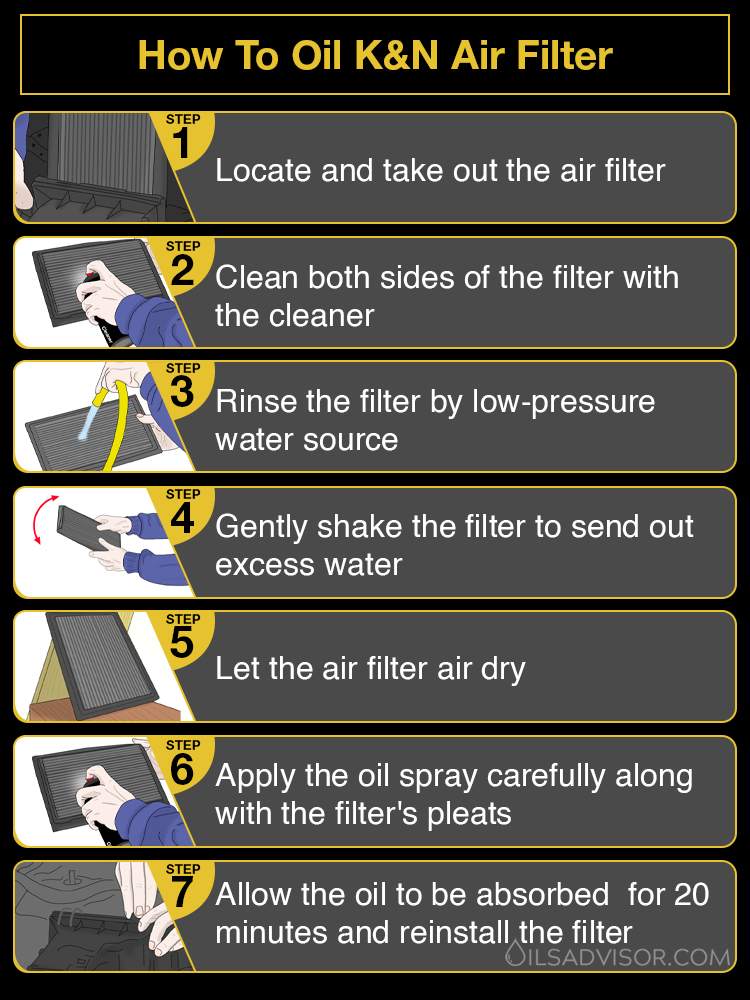
Step 1: Determine the Oil Amount
K&N lists the factory-prescribed amount of oil for each specific air filter on the product specifications tab at KNFilters.com. This factory amount (usually less than 2 ounces) gives you a benchmark for re-oiling.
Using the squeeze bottle kit (Recharger part number 99-5050) helps you more accurately measure the amount of oil applied. This prevents over-oiling, which is the primary cause of MAF sensor contamination.
Step 2: Apply the K&N Filter Oil
K&N offers their oil in both a squeeze bottle and an aerosol spray format. Both work equally well.
For the squeeze bottle, apply K&N air filter oil evenly along the crown of each pleat. Some users prefer running a tiny bead of oil along the ridges for better control.
For the aerosol spray can, spray the oil evenly along the crown of each pleat, holding the spray nozzle about 3 inches away from the filter. Use a light mist and avoid overspraying surrounding items in your garage or workspace.
Step 3: Wicking and Touch-up
After the initial application, allow the oil to absorb into the cotton media. Let the oil wick (absorb and spread) for approximately 20 minutes.
After the wicking period, touch up any light areas (white spots) on either side of the filter until there is a uniform red color in all areas. The red dye shows precisely where the oil has been applied, making it easy to identify spots that need more coverage.
If oil drips from the filter, allow it to sit until the dripping stops, then wipe any excess oil from the filter frame. Wiping off the excess is the secret to avoiding oil contamination in the intake system.
Very important: Use only K&N oil for this process. Substitute petroleum products like motor oil or transmission fluid are formulated differently and will soften and destroy the rubber sealing edges of the filter element.
Frequently Asked Questions
How often should I clean and re-oil my K&N cotton gauze air filter?
Automotive replacement filters can go up to 50,000 miles under normal driving conditions, while oversized conical filters on performance intake systems can sometimes reach 100,000 miles. Some owners prefer more frequent service, cleaning and re-oiling every two oil changes (around 20,000 km).
How can I tell if I have applied the correct amount of oil to my K&N air filter?
Apply the oil evenly, wait 20 minutes for it to wick through the cotton, then touch up any white spots until you achieve a uniform red color across all pleats. If oil drips from the filter, let it sit until dripping stops and wipe excess from the frame—this prevents oil from entering the intake system.
What is the difference between the K&N squeeze bottle oil and the aerosol spray oil, and which should I use?
Both the squeeze bottle and aerosol spray work equally well. The choice comes down to personal preference. The squeeze bottle gives you more accurate measurement and better control for touching up specific areas, while the aerosol provides quick spray-on application.
Can I use any other type of oil (like motor oil or ATF) instead of genuine K&N filter oil?
No, K&N explicitly warns against using motor oil or transmission fluid because they will soften and destroy the rubber sealing edges of the filter element. Regular oils aren’t sticky enough and will drain off by gravity, leaving the filter dry and unprotected.
What are the potential problems or symptoms of over-oiling a K&N air filter?
Over-oiling can contaminate the Mass Air Flow sensor, causing it to read incorrectly or throw diagnostic codes. Dealership technicians have seen warranty claims rejected due to over-oiling ruining electrical components, and applying oil to a damp filter locks in moisture that can damage sensors.
Can I use WD-40 instead?
No, K&N explicitly lists WD-40 as a product not to use. WD-40 is too thin to provide proper tacking action and is also highly flammable.
Final Words
The debate surrounding K&N filters highlights a fundamental trade-off: performance gains versus convenience. While the lifespan cost savings and potential airflow increase appeal to some users, the reliance on precise oiling for filtration efficiency introduces a critical point of failure.
Whatever you decide, just remember: Never use dishwashing detergent to clean your K&N filter or cooking oil to recoat it. These household products will damage the filter media and compromise the rubber sealing edges.
For maximum performance and engine safety, the best option is to use K&N air filter oil.
Related Reads
- Unparalleled Penetrating Oils for Rusted Nuts and Bolts Explore how K&N air filter oil substitutes compare to other penetrating oils in terms of effectiveness and performance – Learn more.
- Liqui Moly vs. Mobil 1 – Which is the Better Option? Compare the benefits of using K&N air filter oil substitutes with Liqui Moly and Mobil 1 for maintaining engine efficiency – Read more.
- Understanding ILSAC GF-6: The Best Engine Oils for Modern Vehicles Discover how K&N air filter oil substitutes stack up against ILSAC GF-6 standards for modern engine protection – Find out more.
- Best Oil For 6.7 Cummins 2022 See how K&N air filter oil substitutes can enhance the performance and longevity of the 6.7 Cummins engine – Explore here.
- Reducing Oil Consumption for Catalytic Converter Efficiency Learn how K&N air filter oil substitutes can play a role in maintaining optimal air flow and reducing oil consumption for better catalytic converter efficiency – Discover now.
![Motorcraft Coolant Equivalent: [Orange & Premium Gold]](https://oilsadvisor.com/wp-content/uploads/2021/07/motorcraft-coolant-1024x576.png)