API SP is the current gasoline engine oil standard, replacing the older API SN and the interim SN Plus. It was developed specifically to handle the demands of modern engines, especially Turbocharged Gasoline Direct Injection (TGDI) units.
API SP Versus SN
API SP improves on SN in three key areas. First, it requires mandatory Low-Speed Pre-Ignition (LSPI) protection. LSPI is a phenomenon where the air-fuel mixture ignites before the spark plug fires, and it can cause catastrophic engine damage. SN had no mandatory requirement for this.
Second, API SP adds enhanced timing chain wear protection to reduce friction and chain elongation over time.
Third, it delivers better oxidation stability and deposit control for pistons and turbochargers. This is important if you’re running a turbocharged engine that generates high heat.
Popular API SP Motor Oils
API SP oils are widely available across price points, from premium synthetics to store brands. The table below covers the most common options, along with their viscosity grades and additional approvals such as GM dexos1 Gen 3, Ford WSS, and ACEA specifications.
Brand Product Line(s) Viscosity Grade(s) Other Compatibilities Example Product Mobil 1
Extended Performance (EP), EP High Mileage
0W-20, 5W-20, 5W-30, 10W-30
dexos1 Gen 3, Ford WSS-M2C961-A1 (5W-30), WSS-M2C962-A1 (0W-20), Chrysler MS-6395 Mobil 1 High Mileage, Truck & SUV, Advanced Fuel Economy 0W-16, 0W-20, 5W-20, 5W-30, 0W-30, 10W-30, 10W-40 dexos1 Gen 3, Ford WSS-M2C963-A1 (0W-30), Chrysler MS-6395 Castrol Edge, Edge Extended Performance, Edge High Mileage 0W-20, 5W-20, 5W-30, 0W-30 dexos1 Gen 3, Ford WSS-M2C961-A1 (5W-30), Ford WSS-M2C962-A1 (0W-20) Castrol GTX Full Synthetic, Magnatec 0W-20, 5W-30 dexos1 Gen 3, Ford WSS-M2C961-A1 (5W-30) Valvoline Advanced Full Synthetic, EP Full Synthetic MaxLife 0W-20, 5W-20, 5W-30 dexos1 Gen 3, Ford WSS-M2C961-A1 (5W-30) Pennzoil Platinum Full Synthetic, Gold Synthetic Blend 0W-20, 5W-20, 5W-30 dexos1 Gen 3, Honda/Acura HTO-06 Lucas Oil Synthetic, Road Ready Synthetic Plus 0W-20, 0W-30, 5W-30 dexos1 Gen 3 Motul 8100 Eco-Lite Gen 3 0W-20, 5W-20, 5W-30 dexos1 Gen 3 Motul 8100 ECO-CLEAN 0W-30 API SP Ravenol DFE, DXG, HDX, MDI, PDT, PSE 0W-20, 5W-30 dexos1 Gen 3 ACDelco Full Synthetic, Supreme Plus 0W-20, 5W-30 dexos1 Gen 3 (GM Factory Fill) Havoline ProDS Full Synthetic, Fully Synthetic ECO 0W-20, 5W-30 dexos1 Gen 3 Royal Purple High Performance 0W-20, 5W-30 dexos1 Gen 3 Idemitsu IFG3 Full Synthetic 0W-20, 5W-20, 5W-30 SQ, GF-7


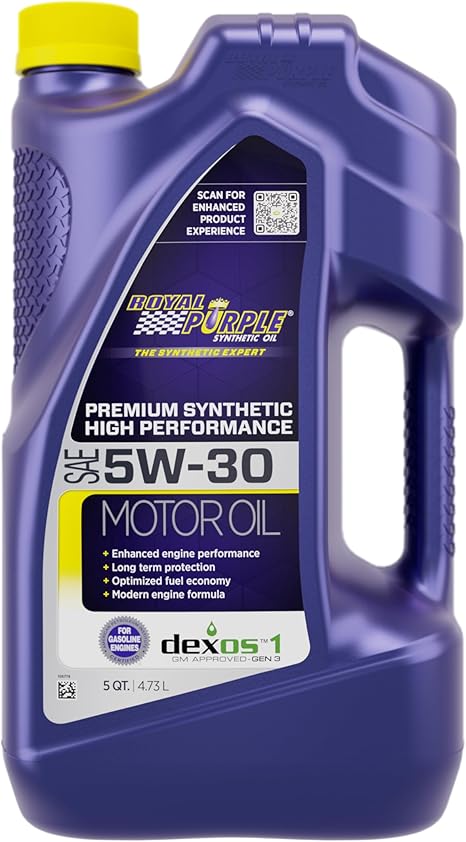

If your vehicle requires a lower viscosity, the best 0W-20 motor oil brands are a good place to start.
Backward Compatibility for API SP
API SP is fully backward-compatible with engines originally specifying API SN Plus, SN, SM, SL, or SJ.
As long as the viscosity grade matches your manufacturer’s recommendation, API SP is safe to use and will actually provide a higher level of protection than what those older specs required.
API SP and ILSAC GF-6
API SP includes stricter requirements for friction reduction and thermal stability compared to SN. When an oil carries both the API SP and Resource Conserving labels, it meets the ILSAC GF-6A standard. This combines strong performance with improved fuel economy and added protection for engines running ethanol-blended fuels like E85.
However, API SP and ILSAC GF-6 don’t cover identical ground. ILSAC GF-6 applies specifically to fuel-efficient viscosity grades: 0W-20, 5W-20, 5W-30, and 10W-30.
API SP covers those same grades but extends further to include heavier viscosities like 10W-40 and 20W-50, which fall outside the ILSAC categories. If your vehicle requires a heavier grade, ILSAC GF-6 simply does not apply, but API SP still does.
If you are deciding between the two most common viscosity grades, comparing 5W-20 vs 5W-30 is a good place to start.
API SP for Motorcycle and Scooter Use

Motul 7100 4T 10W-40 meets API SP and is safe for wet clutches.
Motor bike companies are beginning to adopt API SP to meet stricter emissions standards like EURO 5+, but owners need to check compatibility carefully before making a switch. Motorcycles with wet clutches require oils meeting JASO MA or MA2 standards. Some automotive API SP oils contain friction modifiers that cause clutch slip, making them unsuitable for these engines. Scooters with dry clutches are a different situation.
Owners often specifically seek out API SP oils labeled Resource Conserving because the friction modifiers improve fuel efficiency without any clutch-related risk.
How to Identify if a Motor Oil Meets API SP
The most reliable place to start is the API Service Symbol, commonly called the “Donut.” It is a circular badge divided into three sections.
The top half states the performance level; for API SP oil, it will specifically read “API SERVICE SP” in that section. The center displays the SAE viscosity grade, such as 5W-30.
The bottom half will say “RESOURCE CONSERVING” if the oil meets the ILSAC GF-6A or GF-7A standards for fuel economy. If that phrase is absent, the oil meets API SP but not the fuel economy tier.

An example of a motor oil that meets both API SP and ILSAC GF-6A
Depending on the oil’s viscosity and fuel economy properties, the bottle may also carry one of two additional certification marks. The Starburst, usually found on the front of the bottle, identifies oils that meet the current ILSAC engine protection and fuel economy standards, such as GF-6A or GF-7A.
The Shield is a newer mark used specifically for 0W-16 viscosity oils that meet the ILSAC GF-6B or GF-7B standards. Not every API SP oil will carry these marks, but if they are present, they confirm the oil has passed the corresponding ILSAC requirements.

A motor oil that meets newer standards, API SQ and ILSAC GF-7A.
Some bottles use language like “meets or exceeds API SP” or “recommended for API SP applications” without displaying the official circular seal or Starburst. That phrasing typically means the manufacturer is making a claim but has not obtained an official license from the API.
Manufacturers that have paid for certification are generally quick to display the actual marks. If a bottle carries the official GM dexos1 Gen 3 icon, that oil is required to meet or exceed API SP specifications, so the standard is built into that certification. To verify certified products before purchasing, check the dexos approved oil list.
Closing Notes
API SP is a strong standard, but the industry has already moved forward.
API SQ, introduced in March 2025, is the new benchmark for modern gasoline engines. It extends LSPI protection to aged oil; and raises the bar on timing chain wear, deposit control, cold-start performance, and hybrid compatibility.
It is fully backward-compatible with API SP and older standards. On the diesel side, PC-12 is the next development to watch.
Related Reads
- Understanding ILSAC GF-6: The Best Engine Oils for Modern Vehicles: Learn about the latest oil specifications like API SP and ILSAC GF-6.
- Comprehensive Guide to Oil Sensor OBD Error Code Diagnosis and Fixes: Discover how using the right API SP oils and fluids can prevent engine issues and OBD error codes.
- Dexos Approved Oil Lists: Dexos 1, Dexos 2, Dexos 3, Dexos D, Dexos R: Compare API SP oils with Dexos-approved oils to find the best options for your vehicle.
- Understanding ACEA C5 Engine Oil Specification: See how API SP oils align with ACEA C5 standards.
- List of Motor Oils with Chrysler MS-6395 Certification: Discover which API SP oils also meet Chrysler MS-6395 certification.