Skip to content
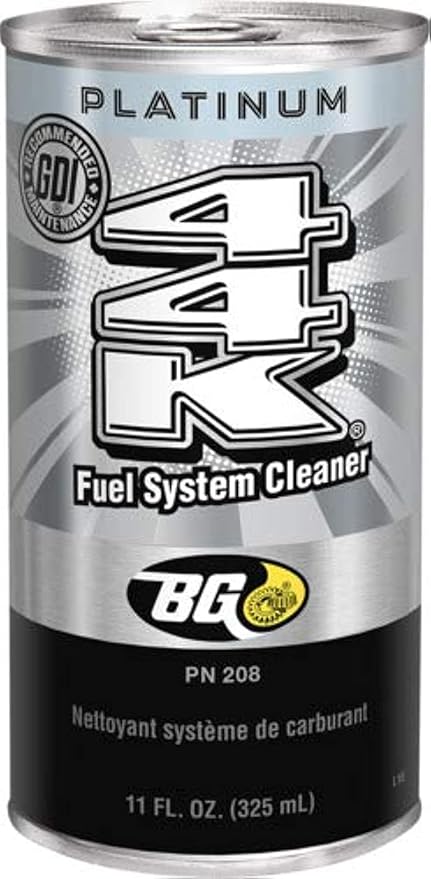
BG 44K Platinum is a high-performance fuel system cleaner. It attacks carbon deposits throughout the fuel system, including injectors, intake valves, ports, and combustion chambers. It is specifically formulated for gasoline direct injection (GDI) engines, which are especially prone to carbon buildup due to how they deliver fuel.
BG 44k Platinum New
Dealerships and professional shops use BG 44K Platinum regularly for what they call a carbon depletion or fuel system cleaning service.
Sea Foam Motor Treatment is petroleum-based. It is made entirely from refined crude oil derivatives rather than synthetic chemistry. Its three main ingredients are pale oil for lubrication, naphtha for cleaning, and isopropyl alcohol (IPA) for moisture control.
Sea Foam works on gasoline and diesel engines, and it is a popular choice for small equipment like lawnmowers, snowblowers, and outboard marine engines.

Sea Foam Motor Treatment
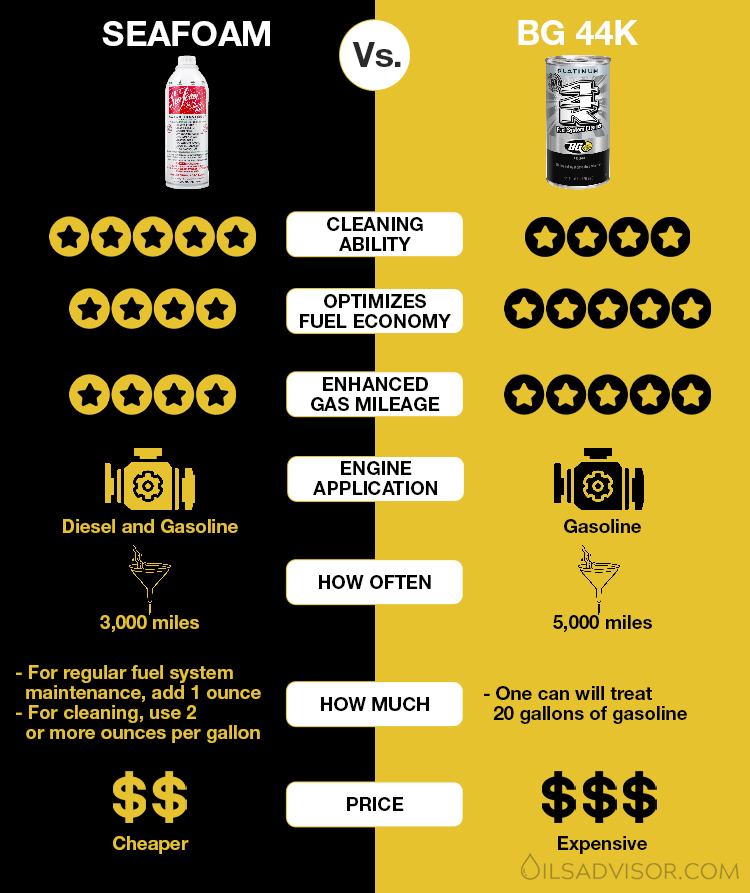
This is their core difference: Sea Foam is a versatile maintenance product that cleans lightly and stabilizes fuel. BG 44K is a heavy-duty synthetic cleaner that targets hardened carbon when something has already gone wrong.
How BG 44K and Sea Foam Work Inside an Engine
Sea Foam works as a solvent. When added to the fuel tank, Sea Foam dissolves gum, varnish, and light deposits that build up in injectors, carburetors, and fuel passageways.
The alcohol component helps manage moisture, which is a real problem in engines running ethanol-blended gasoline. When added to the engine oil before a drain, it loosens sludge from the crankcase, piston rods, and oil passages.

SEA FOAM SPRAY CLNR
Often, Sea Foam causes the oil to turn noticeably dark by the time it is drained. When inducted through a vacuum line, it can reach the backsides of intake valves, where carbon deposits can absorb fuel and cause lean misfires. This method typically produces a large cloud of white smoke out of the exhaust, which is normal and simply the product burning off.
BG 44K Fuel System Cleaner
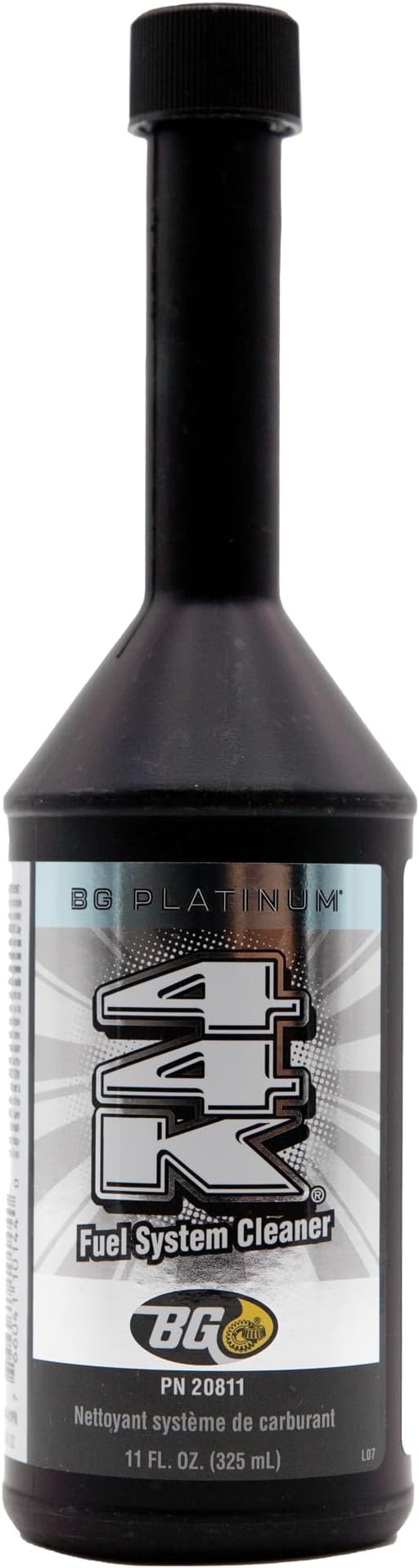
BG 44K works at the molecular level. It is a PEA-based cleaner, which stands for polyetheramine. PEA is a synthetic detergent that breaks the chemical bonds holding hardened carbon to metal surfaces, rather than simply dissolving softer deposits the way a petroleum solvent would. This matters most in GDI engines, where injectors spray fuel directly into the combustion chamber at high pressure and temperature.
Those conditions bake carbon onto injector tips and piston crowns faster than in older port injection engines. BG 44K is formulated to handle that kind of buildup. You add the entire can to a near-empty fuel tank, fill up normally, and let it work through the system as you drive.
BG 44K Product Variations

BG 44K, EPR, MOA
BG 44K exists in two main versions, and it is frequently sold as part of larger professional service kits rather than as a standalone can.
BG 44K Platinum (PN 208) is the current standard version and the one most people are referring to when they mention BG 44K. It is a 100% synthetic cleaner designed for modern GDI engines, though many users report it works equally well in older port fuel injection (PFI) and sequential fuel injection (SFI) systems. If you own a pre-2010 vehicle and are wondering whether the Platinum formula is still appropriate, the short answer is yes.
BG Platinum 44K for Hybrids (PN PF01) is a separate formula built for hybrid electric vehicles. Hybrids run their gasoline engines differently than conventional vehicles. Frequent stop-start cycles mean the engine does not always reach full operating temperature, which changes how deposits form in the injectors and combustion chambers. This version is formulated to address those specific deposit patterns.
BG also makes several products that are commonly used alongside BG 44K but serve different purposes. BG MOA is a synthetic oil conditioner added to the crankcase during the same service interval.
BG EPR (Engine Performance Restoration) is an engine flush used before an oil change to dissolve deposits from piston rings.
BG Supercharge II is a lighter fuel supplement meant to maintain a clean fuel system between major services. None of these are strictly BG 44K, but they are worth knowing if a shop recommends a full BG treatment and you want to understand what each product in the kit actually does.
Sea Foam Product Variations
Sea Foam makes more than just the original Motor Treatment. Here is what each product is actually for.
Sea Foam Motor Treatment the product most people mean when they say “Sea Foam.” It goes into the fuel tank, the crankcase, or through a vacuum line depending on what you are trying to clean.
Sea Foam Spray is an aerosol version used for throttle body cleaning and top engine cleaning. If you want to target intake valve deposits directly without drawing liquid through a vacuum line, this is the more controlled way to do it.
Sea Foam High Mileage is formulated for gas engines over 75,000 miles. It shares the same core chemistry as the original but is tuned for engines with more wear and accumulated residue.

Sea Foam Marine PRO Marine Fuel System Treatment MP20
Sea Foam Marine PRO is built for marine engines and addresses the fuel system issues common in boats: rough idle, hard starting, and fuel degradation from sitting.
Sea Foam IC5 Fuel Injector Cleaner is a concentrated pour-in cleaner focused specifically on injector spray patterns. There is also a High Mileage Fuel Injector Cleaner variant for older engines.

Sea Foam Trans Tune Transmission Treatment
Sea Foam Trans Tune is a transmission-specific product used to clean, flush, and stabilize transmission fluid. It is not interchangeable with the Motor Treatment.
Beyond engine products, Sea Foam also makes Deep Creep, a penetrating lubricant for rusted or seized fasteners, Bugs B Gone for removing road grime and insects from painted surfaces, and a Universal Power Steering Fluid compatible with most domestic and foreign systems.
Most Sea Foam products share the same base chemistry of pale oil, naphtha, and isopropyl alcohol, with different ratios or delivery methods suited to each application. The aerosol products and the pour-in products are not interchangeable, even when the underlying formula is similar.
What Problems Does Each One Fix?
Sea Foam is at its best when you are dealing with light deposits, moisture contamination, or an engine that has been sitting. It reliably resolves rough idles and hard starting caused by gummed-up injectors or carburetors.
Fleet mechanics have used it on high-mileage vans to smooth out rough-running engines. It is well-regarded for quieting noisy hydraulic lifters when used in the crankcase, and it is arguably the best product available for protecting small engines and marine engines during storage.
BG 44K is the product professionals reach for when an engine is already showing symptoms that simpler products have not resolved. This includes cylinder misfires that are not caused by a failed ignition coil or spark plug but by internal carbon fouling, engine pinging (detonation) from combustion chamber deposits, clogged injectors that are distorting fuel spray patterns, and fuel economy loss in high-mileage engines.
Online, we found independent BMW shops and some Lexus and Ford dealerships use BG 44K specifically for GDI carbon depletion services.
One honest caveat worth mentioning: any cleaner, especially in a high-mileage engine that has never been serviced, carries a small risk of loosening a large amount of built-up debris at once. That debris has to go somewhere, and in a neglected system, it can stress the fuel filter. If your vehicle is overdue for a fuel filter change, do that before running a strong cleaner through it.
Safety and Compatibility
Both products are safe for catalytic converters and oxygen sensors when used as directed. Sea Foam is safe for rubber seals and gaskets, which is part of why it has been trusted in older carbureted engines for decades. BG 44K is formulated for modern materials and the high-pressure environments of GDI fuel systems.
Neither product requires draining the fuel tank or adding protective treatments afterward. The concern about Sea Foam thinning engine oil is real but manageable: the recommended dose is relatively small compared to total oil volume, and the product is designed to be drained out with the oil at the next change rather than run indefinitely.
Cost and Availability
Sea Foam is easy to find and inexpensive. A 16 oz. can typically runs between $7 and $13 at AutoZone, O’Reilly, Advance Auto Parts, NAPA, Walmart, Home Depot, and most major retailers. For regular maintenance, many owners add it to the fuel tank every 3,000 miles or to the oil system once or twice a year.
BG 44K costs more and is harder to find in standard retail stores. A single 11 oz. can typically runs between $20 and $27. BG products are designed primarily for the professional service channel, so your best options are dealerships, independent repair shops, NAPA stores, or online through Amazon.
If BG 44K is used as a once-a-year corrective treatment or every 10,000 to 15,000 miles, the cost is reasonable relative to what a full professional fuel system service at a shop would run, which can reach $125 to $250 depending on labor.
Closing Notes
If you are looking for a product to keep small engines, marine engines, or carbureted systems healthy during storage or regular use, Sea Foam is the right choice. It is also a practical option for routine crankcase cleaning before oil changes and for light deposit maintenance in daily drivers. Its versatility and low price point make it easy to keep on the shelf.
If your modern GDI engine is already pinging, misfiring, or showing a noticeable drop in fuel economy, and simpler maintenance products have not made a difference, BG 44K is worth the cost. It is a purpose-built tool for the kind of stubborn carbon that GDI engines are notorious for producing. Think of it less as a routine additive and more as a targeted treatment when performance has already degraded.
The two products are not really competing for the same job. Sea Foam is preventive, versatile, and mild. BG 44K is corrective, specialized, and aggressive. Used appropriately, both earn their place in your garage.
Related Reads
- Marvel Mystery Oil Review — How does Marvel Mystery Oil stack up against BG 44K and Seafoam? We break down the real differences – Learn more.
- Lucas Vs Seafoam: Head-To-Head Comparison — Two popular engine treatments, one winner. See which cleans better and lasts longer – Read more.
- Best Oil for Honda Odyssey — Not all 30-weight oils are equal. Find out which full synthetic holds up best in the Odyssey’s V6 – Find out more.
- Best Engine Penetrating Oil — Seized bolt or stuck component? Here’s what actually works and what’s just marketing – Explore here.
- Pennzoil Vs Mobil 1: Head-To-Head Comparison — Both are top-tier synthetics, but they’re not identical. Here’s how they differ where it counts – Discover now.