Skip to content
Oil absorbents are designed to attract and lock in oily, water-repelling substances. They come in pads or powders, and they work by soaking up liquid or converting it into a rubbery, manageable solid. Sweeping compounds do something different: they capture dust and debris during sweeping so particles don’t become airborne.
These compounds come in two types: gritted (with abrasives, for loosening grime) and gritless (non-abrasive, for finished floors). In this post, we’ll focus on oil absorbent powders.
How Oil Absorbent Powders Work
Depending on the material, oil absorbent powders use physical absorption, clumping, chemical encapsulation, or biological breakdown to capture and contain oily substances.
Physical Absorption
Standard powders made from materials like montmorillonite clay or coconut coir draw liquids into their porous structures and lock them in. Coconut coir, for example, can absorb more than nine times its own weight. Most traditional powders need 30 minutes to an hour to fully soak up the oil and convert it into a rubbery solid that can be swept or scraped away.
Clumping
Corn cob-based absorbents are built for fast action. When applied to a spill, the granules bind with the liquid quickly and form clumps, cutting down on cleanup steps and reducing airborne dust. Corn cob absorbents typically handle up to five times their weight in liquid, which puts them ahead of standard clay products.
Microencapsulation
Some synthetic powders use a patented process called microencapsulation. Rather than simply soaking up oil, these super-absorbent polymers bond directly with the hydrocarbons on contact, permanently containing them so they can’t leach back out. The spill solidifies into clusters or floating mats. Because the mats float indefinitely on water, they’re easy to collect and dispose of.
Bioremediation
Bioremediation powders contain live microorganisms that break down hydrocarbons into harmless byproducts, penetrating deep into porous surfaces like concrete in the process. This is a biological mechanism, not a physical one, so it works slowly. Full remediation of a set-in stain typically takes one to two weeks.
Non-Slip Function
Some powders serve a secondary purpose after absorption. Certain products leave behind a textured surface once the grease or oil is absorbed. That texture improves traction and reduces slip-and-fall risk on kitchen or warehouse floors.
How to Clean Up Oil Spills During a Car Oil Change
Motor oil contains chemical additives that can irritate skin and shouldn’t be inhaled. Before you start any cleanup, put on gloves and safety glasses. A drip pan or garage floor mat under the vehicle during oil changes prevents most spills before they happen. Whether you need to change a Ford F150’s motor oil or maintain another common vehicle, preparation is key to protecting your garage floor.
If oil hits the floor, blot it up immediately with old rags or paper towels. Don’t wipe. That spreads the oil and makes the stain larger.
Applying the Powder
Cover the spill completely with absorbent powder or granules. If you’re using a corn cob-based product, work the granules into the liquid with a broom to activate clumping. Wait times vary by product. Standard absorbents need at least 10 to 15 minutes to soak up surface oil. On porous concrete, leaving cat litter or baking soda for several hours or overnight produces better results. Super-absorbent polymer powders microencapsulate hydrocarbons on contact and solidify the spill into clusters or floating mats for easy retrieval.
Cleanup Once the powder has absorbed the oil or clumped, sweep up the saturated material. For large spills, you may need to repeat the process: apply a fresh layer of granules, let it sit, and sweep again until the surface is no longer oily. If a stain remains after sweeping, wet the area and apply a degreaser or a thick paste of baking soda and water. Scrub with a stiff-bristle brush using circular motions to pull oil out of the concrete’s pores, then rinse and dry.
Disposal
Rules vary depending on your state and whether you’re a homeowner or running a business. In many states, used absorbents from DIY car maintenance at home are exempt from industrial hazardous waste regulations and can go out with regular garbage.
Check your local guidelines to confirm. One rule that applies broadly is the paint filter test: absorbent material cannot go to a landfill if it still contains free liquid. Drain or wring it out until nothing drips. If the oil is contaminated with hazardous solvents, or if you operate a commercial shop, you must make a formal hazardous waste determination and may be required to use a permitted disposal facility.
Which Oil Spill Powder Should You Use?
Spill Magic Absorbent Powder

Spill Magic Absorbent Powder
Spill Magic is a lightweight absorbent powder made primarily from amorphous aluminum silicate (perlite). It’s built to handle liquid and semi-liquid spills quickly and leave the surface dry with no residue. For oil changes, it’s a practical option. The powder handles virtually any viscosity, including thick motor oil, and works on concrete and asphalt. Basically, all the surfaces most common in a home garage.
Once absorbed, the material sweeps up cleanly. Leaving the floor bone dry is also a safety benefit, since wet or oily floors are a slip hazard. Customer feedback is consistently positive, with roughly 88% of reviewers recommending it and an average rating of 4.5 out of 5 stars.
Users most often praise the speed of absorption, ease of cleanup, and the absence of residue Spill Magic is also used in warehouses, factories, hospitals, and schools. It also handles biohazard cleanup and food spills like cooking oil. An acid-neutralizing version (SM202DBAN) is available for industrial acidic spills, though it cannot be used on hydrofluoric acid.
Zep Instant Spill Absorber
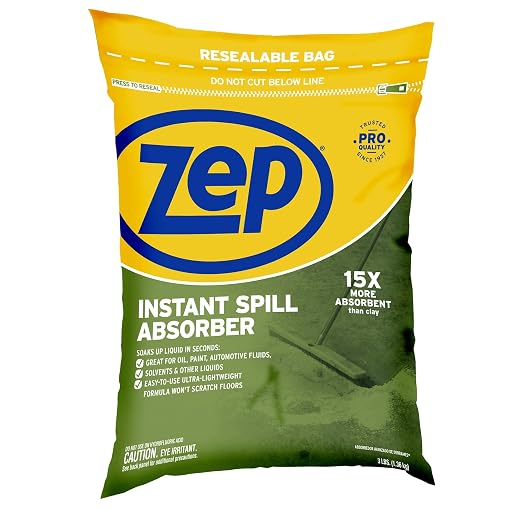
Zep Instant Spill Absorbent Clay
Zep Instant Spill Absorber is a high-performance alternative to clay, claiming 15 times the absorption capacity. It’s designed to trap and encapsulate liquids rather than simply soaking them up. The product is specifically formulated for automotive fluids including motor oil, antifreeze, and solvents.
Users report it works well on driveways and garage floors, leaves surfaces clean and dry, and doesn’t scratch flooring. Outside the garage, it’s used in warehouses, airfield runways, and manufacturing facilities. It also handles paint cleanup, sticky residues from deck stains, and winter meltwater puddles from vehicles.
One user noted that leaving it on a spill for a week noticeably reduced foul damp odors. Do not use it on hydrofluoric acid. Ratings hold steady at 4.4 to 4.5 stars across platforms, with 83% to 86% of reviewers recommending it.
Zorbent Super Absorber

Zorbent Liquid Spill Kit Super Absorbent Powder
Zorbent is marketed as 16 times more effective than traditional clay absorbents. It works on both oil-based and water-based liquids regardless of viscosity. For motor oil changes, it’s a strong option. One reviewer absorbed over 5 quarts of leaked engine oil with it, outperforming clay in both speed and convenience. The weight difference alone is significant: 10 lbs of Zorbent replaces roughly 190 lbs of clay material. A 5 lb bag handles the same volume as a 45 lb bag of kitty litter.
For a home garage, one bag can last years because a little goes a long way. The formula is dust-free and leaves floors bone dry without scratching or leaving residue. Reviewers consistently highlight the lightweight nature, fast absorption, and clean finish. One warehouse worker noted it’s heavy-duty enough for professional use but practical enough to keep at home.
Closing Notes
Oil spills during an oil change are common. Even professionals deal with sudden, messy leaks. Don’t let a spill shake your confidence. Treat cleanup as a standard part of the job. That said, don’t leave it sitting. Unfinished concrete is porous and absorbs oil quickly, making stains harder or impossible to remove the longer you wait. Untreated oil is also a slip hazard, and if it reaches a storm drain, you’re looking at potential fines. Act immediately.
Blot up standing liquid with rags or paper towels. Cover the spill generously with absorbent powder. Cat litter, baking soda, or cornstarch work in a pinch, but specialized products like coconut coir or corn cob granules absorb five to nine times their weight and outperform household alternatives.
Sweep up the saturated material. If a stain remains, apply a degreaser or a baking soda and water paste, scrub with a stiff-bristle brush in circular motions, and rinse. For disposal, homeowners doing DIY oil changes are often exempt from hazardous waste regulations. Check your state’s guidelines, but in many cases the material can go out with regular trash once it contains no free-flowing liquid.