Are you finding it difficult to get the right equivalent alternatives to the Motorcraft Mercon Lv Automatic Transmission fluid? If yes, trouble no more because you are in the right place.
Mag 1, Valvoline, and Dexron are three safe and licensed products that can be substituted for the Mercon Lv Automatic Transmission Fluid. But which is the best pick?
In this article, I will analyze these three products in terms of prominent features and their pros & cons to help you make your choice.
After this 5-minute reading, I am certain you will choose the best transmission fluid for your vehicle.
Read on for the complete review, your wise selection, and purchase!
Mercon Lv Equivalent
Dexron VI is Equivalent to Mercon Lv
Dexron Vi is the perfect equivalent to Mercon Lv. They are both of premium quality, offering the best lubrication to the transmission parts and having almost the same specs. There are many other facts that you might be curious about, and there are other alternatives discussed. Read on!
Note: Always check the compatibility of your vehicle with a product before purchasing because of factors like voltage and outlets; for products with electrical plugs.
Below are the top 3 choices:
Motorcraft Mercon LV ATF
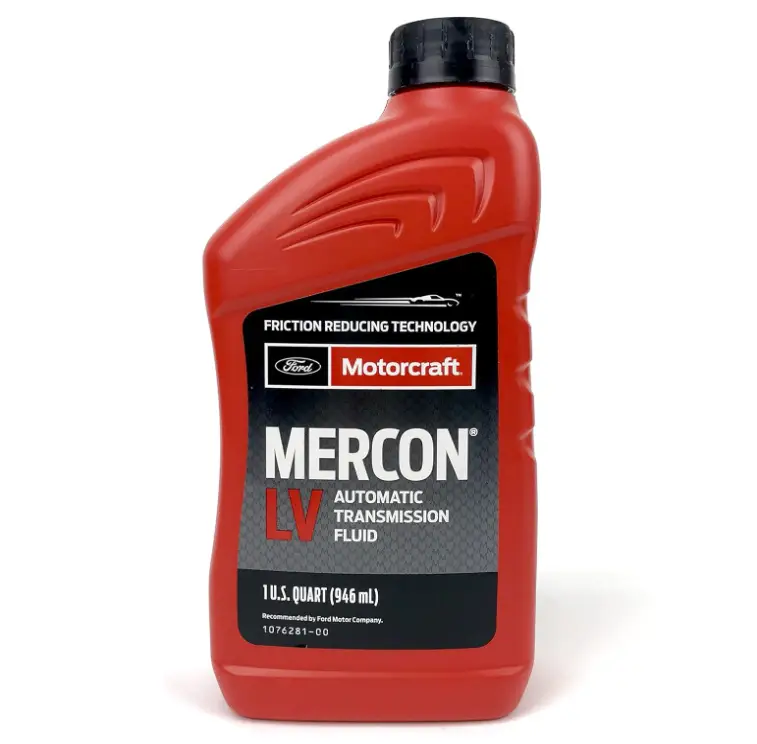
Motorcraft Mercon LV ATF
TMotorcraft Mercon LV is one of the most compatible fluids for vehicles with automatic transmissions, including those with electronically controlled systems. Originally manufactured by Ford Motorcraft, the name “Mercon LV” is licensed to other manufacturers. While it is pricier than Valvoline and Mag 1 fluids, its benefits justify the cost. Motorcraft Mercon improves fuel economy by resisting oxidation and meeting viscosity requirements for automatic transmissions. It also ensures smooth gear shifts.
By protecting the gearbox, this fluid helps you avoid costly future repairs.
Let’s look at some other things this fluid is good for.
Temperature Protection
Motorcraft Mercon uses hydro-processed base oils, high-performing additives, and a high-viscosity index to deliver smoother shifting in extreme temperatures.
Designed with excellent low-temperature fluidity and outstanding thermal and oxidation stability, Motorcraft Mercon resists thickening in cold conditions, ensuring reliable performance.
Improves Friction and Prevents Wear
One of the purposes of using transmission fluids is to ensure lubrication of moving parts and thus improve the friction between these parts. The Motorcraft Mercon carries out this purpose perfectly. Aside from that, it provides the friction necessary to make your vehicle’s internal parts work. It also provides good hydraulic pressure.
The fluid protects your transmission parts from wear. And the formation of gum or foam in your transmission parts is not seen with the use of this fluid.
Prevents Corrosion
A lot of things like moisture and chemicals can act on your transmission parts and cause stuff like corrosion and rust. However, using the Motorcraft Mercon can help reduce the problem of rust and corrosion.
Prevents Rust of Transmission Parts
The Motorcraft fluid contains base oils and advanced additives that protect against any form of corrosion and rust of the transmission parts. This is a good feature that helps to extend your gear service life. Additionally, the fluid helps to maintain responsive shifts, enhance foam control and reduce the wear on gears, bearings, and bushings.
- Outstanding performance at all temperature
- Low-temperature performance and resistance against sludge and deposit formation
- Extend the life-span of transmission parts
- Improves fuel economy
- Not suitable for use in vehicles where MERCON V, MERCON SP, FNR5 Automatic Transmission Fluid, Continuously Variable Chain Type
Bonus: Mopar ZF 8&9 Speed ATF Equivalent
Valvoline Multi-Vehicle ATF
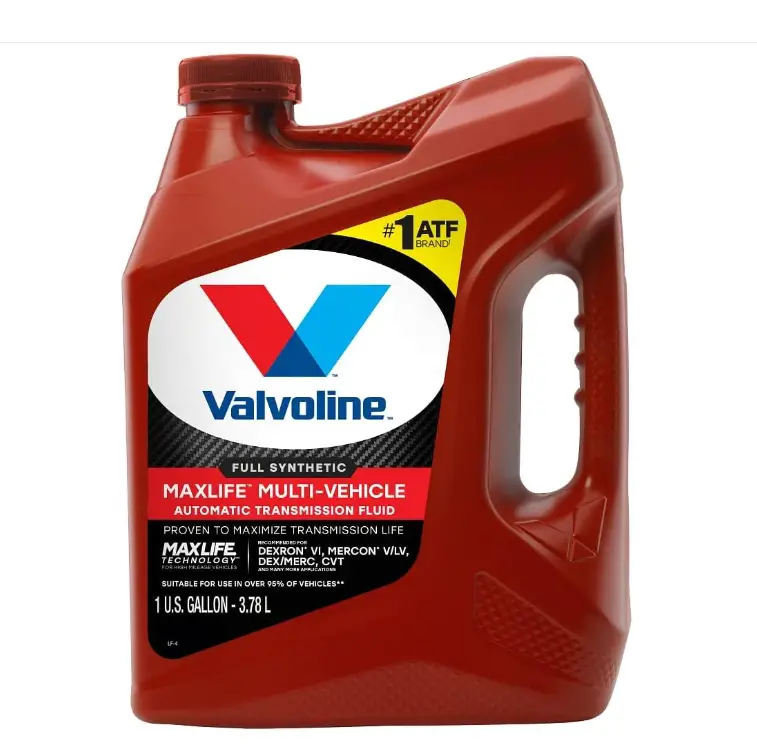
Valvoline Multi-Vehicle ATF
Valvoline, one of the best transmission fluid brands, has developed this multi-vehicle synthetic automatic transmission fluid that measures up with the Mercon Lv. It is cheaper in the market than Mercon Lv. But does a lower price mean less quality? Let’s see this product’s prominent features and make our stand below.
Improved Wear Performance
Developed with an anti-wear technology, this transmission fluid improves transmission durability and protects the transmission against wear and breakdown.
Moreover, the elasticity of seals is maintained and preserved by high-performance seal conditioners. To prevent leakage in high mileage transmissions.
Better Fuel Economy
The Valvoline multi-vehicle fluid also has advanced technology that reduces transmission drag and aids in better fuel economy. This would help you save money.
Outstanding Friction Modifier
Another key feature is the outstanding friction modification provided by Valvoline Multi-Vehicle Automatic Transmission Fluid. Formulated with long-life friction modifiers and full-synthetic base oils, this fluid prevents clutch wear, enhances smooth shifting, improves drivability, and eliminates slippage and shudder. It outperforms conventional fluids, delivering these benefits longer and more effectively.
Improved Heat Resistance
Breakdown due to high temperature is prevented by using the Valvoline multi-vehicle fluid. The base oils and advanced additives, which are components of this fluid, provide greater film protection against high temperature. These same components supply a better flow of oil at low temperatures.
So, what is the negative part?
Some users complain that the Valvoline multi-vehicle fluid is not suitable for GM vehicles.
- Helps to prevents leaks
- Maintains smooth shifts
- Boosts transmission performance
- Contains enhanced cleaning additives that help to reduce varnish formation.
- The viscosity though low is not as low as that of Dexron VI
Mag 1 Low Viscosity Multi-Vehicle ATF
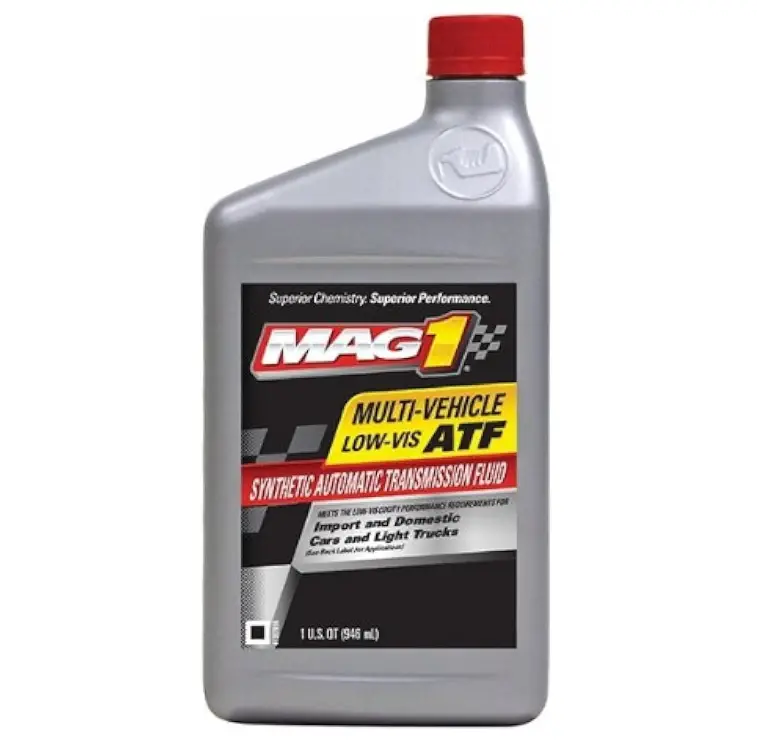
Mag 1 Low Viscosity Multi-Vehicle ATF
Mag 1 Multi-Vehicle Low-Viscosity Transmission Fluid is specially developed with advanced additive technology and full synthetic base stocks, ensuring peak performance for automatic transmissions.
It doesn’t just meet most automatic transmissions’ wear and friction requirements; it exceeds them. It has a price almost half the price of the Mercon Lv.
Let’s see below the features of this fluid that make it qualify as an equivalent.
Superior Performance and Protection
The long-lasting performance and protection against Mag 1 multi-vehicle fluid wear are superior. It can withstand high-stress conditions as it delivers stable friction, allowing drivers to keep pushing their vehicles.
While it features FMX Technology (Friction Management for Xtreme protection against wears), it also features a strong oil film between metals of rotating parts that prevents their contact. The sheer stability is just as excellent also.
Yields Better Fuel Economy
Thanks to its low viscosity, Mag 1® Low Viscosity Multi-Vehicle Transmission Fluid enhances fuel economy. This fluid strikes a balance with its advanced formula, featuring superior additive technology and anti-wear additives that reduce heat buildup, all combined with 100% synthetic base oil.
Superior All-Weather Performance
The Mag 1 Low Viscosity Multi-Vehicle Transmission fluid boasts durability as it is able to resist thickening even during hot weather conditions. It delivers superior friction stability to maintain smooth and consistent shifting and prevent shudder.
Thus, this fluid is an excellent protector during high and low temperatures.
- Protects the transmission parts and the engine
- Reduces wear and can withstand stress
- Affordable price
- Helps to improve fuel economy
- Not suitable for use in heavy-duty applications and high-performance or vehicles
Bonus: Toyota Type T-IV ATF Equivalent
Conclusion
You can never go wrong with the alternatives listed, as they are great options to be used instead of the Mercon LV. Of all of the alternatives above, I could recommend any, but the Motorcraft would be my best pick if asked to choose (check out its pros). It provides overall protection for your vehicle, and it is likened the most to the Mercon Lv.
What about you? Which alternative would you choose?
Please share your experience with us in the comment box below!
Related Reads
- Toyota WS Transmission Fluid Alternative Discover suitable alternatives for Toyota WS transmission fluid that can serve as equivalents for Mercon LV – Learn more.
- Honda ATF DW-1 Equivalents: Best Alternatives and Substitutes Explore the best substitutes for Honda ATF DW-1 to find compatible options for Mercon LV – Read more.
- Nissan Matic Equivalent [S, D, J, K] Identify equivalents for Nissan Matic fluids to uncover potential Mercon LV alternatives – Find out more.
- Mopar ZF 8&9 Speed ATF Equivalent Learn about the best substitutes for Mopar ZF 8&9 Speed ATF, providing insights into high-quality alternatives for Mercon LV – Explore here.
- Mopar ATF+4 Equivalent Discover the top substitutes for Mopar ATF+4 that are also licensed options for Mercon LV – Discover now.
![Motorcraft Coolant Equivalent: [Orange & Premium Gold]](https://oilsadvisor.com/wp-content/uploads/2021/07/motorcraft-coolant-1024x576.png)