
The Ram EcoDiesel is a modern diesel engine. It has sophisticated emissions control, advanced engineering throughout the powertrain, and an efficient fuel economy.
The “eco” part of the ecodiesel comes from its use of Diesel Exhaust Fluid (DEF), a Diesel Particulate Filter (DPF), Selective Catalytic Reduction (SCR), and Exhaust Gas Recirculation (EGR). This is a rare feature for half-ton pickups in the U.S. market.
These systems directly influence what oil you need to run. The 2014 Ram 1500 owner’s manual initially called for 10.5 quarts of SAE 5W-30 synthetic, API Certified Low Ash oil. However, when owners towed heavy trailers or hauled significant loads, the 5W-30 oil film broke down under stress, particularly when the engine was lugged at low RPM under high load.
The third-generation EcoDiesel requires SAE 5W-40 full synthetic engine oil. This is the engine that was introduced for 2020 in the Ram 1500, Jeep Wrangler, and Jeep Gladiator. Around this time, many dealerships switched to Shell Rotella T6 5W-40, which carries the CK-4 rating and has proven reliable in heavy-duty diesel applications.
Ram EcoDiesel Overview
EcoDiesel is a 3.0L V6 turbocharged diesel engine used in most of Chrysler’s second-gen and third-gen Ram 1500s. This second-gen EcoDiesel engine features 240 horsepower with 420 lb-ft torque, and the third-gen boasts 260 horsepower and 460 lb-ft torque.
Generally, the EcoDiesel engine is praised for its excellent fuel economy and smooth performance.
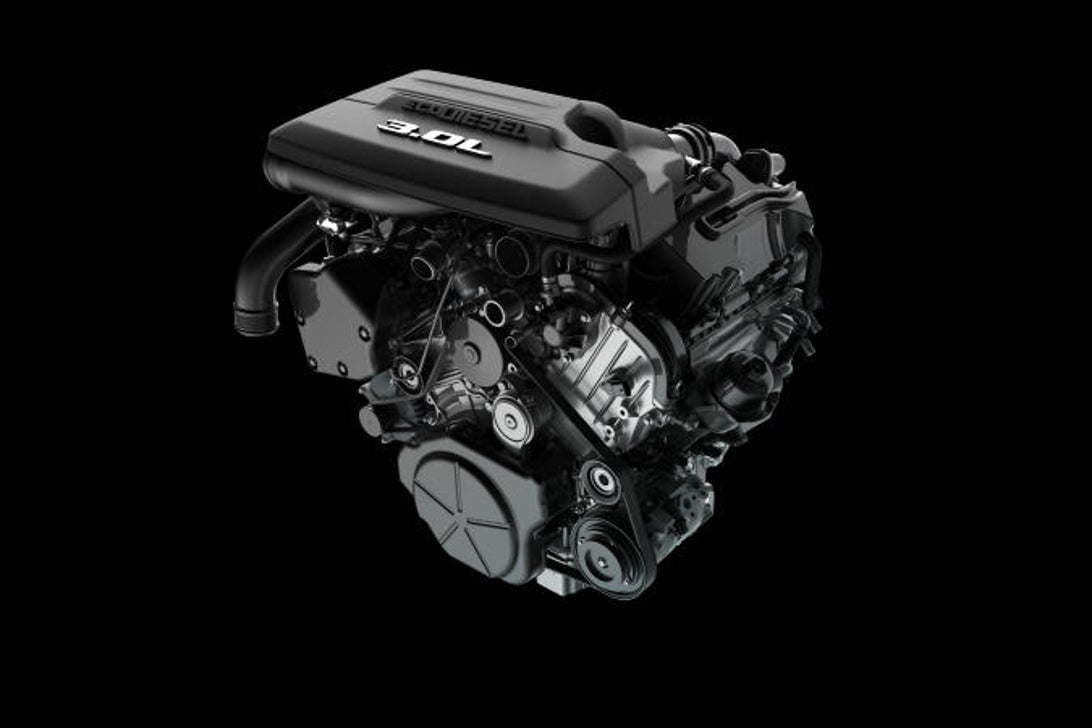
The construction of the EcoDiesel reveals how far diesel technology has advanced. The block uses compacted graphite iron, a material that’s lightweight yet strong enough to dampen vibrations effectively. The cylinder heads are heat-treated aluminum with twin cams. This construction balances weight, strength, and refinement.
Fiat Chrysler claimed that the third generation came with 80 percent new parts. The engine now uses a water-cooled turbocharger with variable geometry turbine (VGT) technology, which increases both efficiency and throttle response. The fuel injection system operates at 29,000 psi (2,000 bar) through redesigned high-pressure direct-injection nozzles, matched to an optimized combustion chamber design.
The pistons are now made with lightweight aluminum alloy units with thinner rings and a low-friction coating on the pin and side skirts. The piston pin is offset 0.3 millimeters from the centerline to reduce noise, vibration, and harshness (NVH). The lower oil sump uses a two-piece design with a sandwiched polymer and metal material to keep weight down and vibration in check. The engine also incorporates Active Air Grille Shutters for improved aerodynamics and thermal management.
Important Note
If you drive a Ram 1500 with an EcoDiesel engine, regardless of the generation, a TSB (Technical Service Bulletin) from Ram indicates that you MUST wait for about 30 minutes after adding or changing the oil before starting the engine.
This wait time is to allow the oil to drain properly throughout the engine. Otherwise, you risk catastrophic engine damage. A dealership reportedly started EcoDiesel vehicles earlier than 30 minutes after adding new oil and replaced the engines due to a fatal error.
Ram EcoDiesel Oil Capacity
Quick Note: There’s no “Generation 1” EcoDiesel available to consumers because the earliest version is a prototype that never reached the public. The first iteration was a GM-VM Motori prototype intended for a European Cadillac.
However, GM’s 2009 bankruptcy ended the program before it could be released. What people sometimes call “Gen 1” is really just the first production EcoDiesel that became available for Jeep and Ram. That’s the Generation 2 EcoDiesel that you can read about below.
Generation 2 EcoDiesel (2014–2019): 10.5 Quarts
The second-generation VM Motori L630 engine used from 2014 through 2019 requires substantially more oil than the later generation.
2014: 10.5 quarts (around 11 liters) with a filter change. Early 2014 owner’s manuals incorrectly cited a lower capacity, sometimes listing 7.7 liters or 8 quarts. Updated manuals corrected this error and confirmed the 10.5 quart requirement. If you’re working on a 2014 model, verify you’re using the correct manual revision.
2015–2018: 10.5 quarts across all these model years. This capacity remained consistent throughout the Gen 2 production run. Owners and service records confirmed that 10.5 quarts is the required amount for proper lubrication and thermal management.
2019: 10.5 quarts for the 2019 Ram 1500 Classic, which continued using the second-generation 3.0-liter EcoDiesel in the older body style. All Gen 2 engines through 2019 require this larger oil volume.
Generation 3 EcoDiesel (2020–2023): 8.5 Quarts
The third-generation engine introduced for 2020 features a reduced oil capacity. This reduction happened partly because the Gen 3 runs cooler than the Gen 2, making the larger oil volume unnecessary for thermal management. The other reason is packaging. The Gen 3 was designed to fit in Jeep vehicles that require a shallower oil pan for solid front axle articulation clearance.
2020: 8.5 quarts for the Ram 1500. Jeep Wrangler and Gladiator applications take 9 quarts, though some sources indicate 8 quarts for certain Jeep configurations. The one-quart difference between Ram and Jeep applications comes down to oil pan depth and design.
2021: 8.5 quarts for the Ram 1500. Jeep Wrangler and Gladiator models require 9 quarts.
2022: 8.5 quarts for the Ram 1500. Jeep Wrangler and Gladiator capacity remains at 9 quarts.
2023: Oil capacity for the Gen 3 varies by application. Ram 1500 models require 8.5 quarts with a filter change, while Jeep Wrangler and Gladiator models require 9 quarts. The 2023 model year was announced as the last year for the EcoDiesel in the Ram 1500 application. Ram announced that the engine would end production in January 2023, making 2023 the final model year.
2024–2025: Discontinued
The EcoDiesel is not available in 2024 or 2025 Ram 1500 models. Production ended after the 2023 model year, so there are no factory Ram 1500 EcoDiesel options for these years.
Pay attention to the two-quart difference between generations. If you overfill a Gen 3 engine by using 10.5 quarts instead of 8.5, you risk oil foaming, increased crankcase pressure, and potential seal damage. If you underfill a Gen 2 engine by using 8.5 quarts instead of 10.5, you’ll reduce the oil’s ability to manage heat and maintain proper lubrication under load. This can accelerate wear on critical components like bearings.
Ram EcoDiesel Oil Type
Related: Jeep Wrangler Oil Type And Oil Capacity Guide
The official requirements changed dramatically between the second and third generations. Find your engine’s generation and oil requirement here:
Generation 2 EcoDiesel (2014–2019 Ram 1500)
The Gen 2 specification is SAE 5W-40 synthetic oil. Originally, it was the 5W-30 specification. It was later revised and ceased after engines started dumping bearings. Simply put: don’t use 5W-30 in a Gen 2 EcoDiesel.
The oil for the Gen 2 Ram EcoDiesel must meet FCA Material Standard MS-10902 and the API CJ-4 rating. ACEA E9/E7 or ACEA A3/B4 are also acceptable. API CK-4 is considered backward compatible with CJ-4 and is often recommended as superior for wear resistance.
Commonly recommended oils that meet these specifications include Shell Rotella T6 5W-40, Mobil-1 Delvac 1 ESP Turbo Diesel Truck 5W-40, and Valvoline Premium Blue Extreme Synthetic 5W-40.
Generation 3 EcoDiesel (2020+ Ram 1500, Jeep Wrangler/Gladiator)
For the Gen 3 EcoDiesel, you must use 5W-40 full synthetic engine oil that meets FCA Material Standard MS-12991 and carries an API SN or API SP rating. The manual explicitly states that equivalent full synthetic SAE 5W-40 engine oil can be used but must display the API Donut trademark on the container.
Why FCA Change the Oil Requirements for RAM EcoDiesel
FCA (Fiat Chrysler Automobiles), now part of Stellantis, serves as the engineering and legal authority that dictates oil requirements for the Ram EcoDiesel. FCA determines which oils must be used to maintain warranty coverage and ensure engine longevity.
Generation 2 (2014–2019): Reactive Changes After Catastrophic Failures
FCA’s most significant intervention for the Gen 2 EcoDiesel came as a direct response to widespread mechanical problems that were destroying engines in the field.
The original owner’s manual specified 5W-30 synthetic oil. This proved inadequate when owners subjected the engine to real-world pickup truck duty cycles. Bottom-end failures, particularly rod bearing failures, became common enough that FCA had to act. The company released a Technical Service Bulletin (TSB) that mandated owners cease using 5W-30 and switch to 5W-40 immediately.
FCA simultaneously mandated that oils meet FCA Material Standard MS-10902 and carry an API CJ-4 rating (or better, such as CK-4), or meet ACEA E9/E7 or A3/B4 categories. This established a clear baseline for oil performance that the earlier specification lacked.
FCA also recognized that the lugging problem was partly a software issue. The company mandated updates to the Transmission Control Module (TCM) software to prevent the engine from operating at excessively low RPM under high load. This forced earlier downshifts to keep engine speed higher and reduce crankshaft flexing. The software change was intrinsically tied to the new lubrication requirements because both addressed the same failure mode: bearing damage from inadequate oil film strength under extreme stress.
Generation 3 (2020+)
When FCA launched the completely redesigned third-generation EcoDiesel for 2020, the company took a different approach. Rather than waiting for problems to emerge, FCA created new proprietary oil standards reflecting the engine’s updated architecture and complex emissions equipment.
FCA created and mandated FCA Material Standard MS-12991. The 2020 Ram 1500 Diesel Supplement states: “We recommend you use 5W-40 synthetic engine oil such as Mopar or Pennzoil Platinum Euro that meets FCA Material Standard MS-12991.”
The company recommends its own branded oils (Mopar) or oils from strategic partners like Pennzoil Platinum Euro that carry MS-12991 certification. However, it’s common for vehicle owners to switch to equivalent engine oils that work with Ram EcoDiesel.
- Shell Rotella T6 Full Synthetic 5W-40: OEM approved product
- Mobil 1 Turbo Diesel Truck Full Synthetic Motor Oil 5W-40
- Valvoline Premium Blue Extreme SAE 5W-40 Full Synthetic
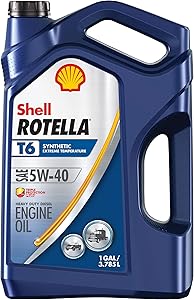
Shell Rotella T6

Mobil 1 Turbo Diesel Truck

Valvoline Premium Blue Extreme
If you’ve been using 5W30 for your Ram 1500 with EcoDiesel, you need to change to this newer specification (5W40) approved by the FCA.
Related: 5w40 Vs 15w40: Detailed Comparison
Shell Rotella T6 5W-40
Shell Rotella T6 Full Synthetic 5W-40 is a widely used equivalent for Ram EcoDiesel engines, particularly the third-generation 3.0L V6 introduced in 2020 for the Ram 1500, Jeep Wrangler, and Jeep Gladiator.
Shell Rotella T6
Check Price at Amazon
It meets the CK-4 specification required for modern diesel pickups with exhaust aftertreatment systems. This heavy-duty oil uses Triple Protection Plus technology, combining synthetic base oils with advanced additives to handle the extreme demands of low-emission diesel engines.
The advanced low-ash formulation (1.0% sulfated ash) is critical because it helps prevent clogging or poisoning of the diesel particulate filter (DPF) and exhaust catalysts. Using high-ash oils in these engines can lead to expensive aftertreatment failures.
Rotella T6 meets API CK-4, the current top specification for diesel engines, along with ACEA E9 and numerous OEM approvals including Cummins CES 20086, which many EcoDiesel owners reference. The oil maintains a Total Base Number (TBN) of 10.2 mg KOH/g to neutralize combustion acids over extended intervals. Its viscosity index and synthetic formulation provide excellent flow down to negative 30°C (dynamic viscosity of 6,300 mPa·s at that temperature), ensuring cold-start protection.
Shell claims a 1.5% fuel economy improvement compared to 15W-40 oils, though real-world gains in a modern 5W-40 application will be modest. More importantly, the oil resists viscosity loss through shear stress, maintaining optimal oil pressure throughout the drain interval.
Rotella T6 is widely available at auto parts stores and big-box retailers, often at competitive prices. It’s also approved for gasoline engines and meets JASO MA/MA2 specs, making it versatile for mixed fleets.
Most EcoDiesel owners running Rotella T6 stick to 7,500 to 10,000-mile drain intervals despite the oil’s extended-drain capability.
Mobil 1 Turbo Diesel Truck 5W-40
Mobil 1 Turbo Diesel Truck 5W-40 is a fully synthetic alternative for Ram EcoDiesel engines, particularly the third-generation 3.0L V6 introduced in 2020 for the Ram 1500, Jeep Wrangler, and Jeep Gladiator.
Mobil 1 Turbo Diesel Truck
Check Price at Amazon
Mobil 1 Turbo Diesel Truck 5W-40 is a heavy-duty diesel oil engineered for modern low-emission engines, including those with Exhaust Gas Recirculation (EGR) like the 3.0L EcoDiesel V6.
The formulation tackles the specific challenges modern diesel engines face. These engines run hotter and generate more soot than older designs, while tighter tolerances mean less oil makeup to replenish additives. Mobil 1 Turbo Diesel Truck handles these demands with exceptional thermal stability and oxidation resistance.
This product meets API CJ-4, CI-4 PLUS, and ACEA E7 specifications, covering the requirements for diesel particulate filter (DPF) equipped engines. The 5W-40 viscosity provides strong protection across temperature ranges, with a viscosity index of 153 and high-temperature/high-shear (HTHS) viscosity of 3.8 mPa·s. The oil maintains a Total Base Number (TBN) of 10.7 mg KOH/g, which helps neutralize acidic combustion byproducts over extended drain intervals.
The low sulfated ash content of 0.95 wt% is critical because it helps protect the DPF and exhaust aftertreatment systems that Ram EcoDiesels rely on. Higher ash levels can clog these systems, leading to expensive repairs.
Mobil 1 Turbo Diesel Truck is fully compatible with conventional oils, making top-offs straightforward if you’re in a pinch. It also meets API SM for gasoline engines, so it works in mixed fleets.
This oil supports extended drain intervals when used according to Ram’s recommendations. However, many EcoDiesel owners stick to more conservative 7,500-mile changes given the engine’s history with emissions system issues.
Valvoline Premium Blue Extreme 5W-40
Valvoline Premium Blue Extreme 5W-40 is a fully synthetic equivalent compatible with Ram EcoDiesel engines, meeting the CK-4 specification required for modern diesel pickups. This oil carries exclusive Cummins endorsement. This matters for EcoDiesel owners since the 3.0L V6 shares design DNA with other Cummins light-duty diesels and requires oils meeting strict emissions-system protection standards.
Valvoline Premium Blue Extreme
Check Price at Amazon
The synthetic formulation tackles the specific challenges of DPF-equipped engines like the EcoDiesel. Premium Blue Extreme maintains sulfated ash below 1.0%, helping prevent particulate filter clogging that can lead to expensive aftertreatment repairs. The oil also provides enhanced protection for engines with Exhaust Gas Recirculation (EGR), which increases soot loading and thermal stress on the lubricant.
The oil carries a Total Base Number (TBN) of 11 mg KOH/g, one of the highest among comparable synthetics. This robust alkaline reserve helps neutralize acidic combustion byproducts over extended drain intervals. The viscosity index of 171 indicates excellent stability across temperature extremes, while the high-temperature/high-shear (HTHS) viscosity of 4.0 cP provides strong film strength under load.
Cold-weather performance is solid, with a pour point of negative 39°C and Cold Cranking Simulator (CCS) viscosity of 6,000 cP at negative 30°C. This ensures reliable cold starts even in harsh climates. Valvoline claims improved fuel economy potential versus conventional 15W-40 oils, though gains will be modest compared to other modern 5W-40 synthetics.
The oil meets Chrysler MS-10902, the factory specification for Ram diesel applications, along with API CK-4, ACEA E9, and numerous heavy-duty OEM approvals. It’s also backward-compatible with gasoline engine specs through API SN.
Most EcoDiesel owners running Premium Blue Extreme follow 7,500 to 10,000-mile change intervals to balance the oil’s capabilities with the engine’s emission system sensitivities.
Comparison of Ram EcoDiesel Equivalent Engine Oils
Note: Not listed means the feature is not found in the product sheet. It does not necessarily mean that it’s not available or supported.
| Property | Mobil 1 Turbo Diesel Truck 5W-40 | Shell Rotella T6 5W-40 | Valvoline Premium Blue Extreme 5W-40 |
|---|---|---|---|
| Viscosity @ 100°C (cSt) | 14.5 | 14.9 | 15.3 |
| Viscosity @ 40°C (cSt) | 97.9 | 90 | 95.1 |
| Viscosity Index | 153 | Not listed | 171 |
| HTHS @ 150°C (cP) | 3.8 | Not listed | 4.0 |
| TBN (mg KOH/g) | 10.7 | 10.2 | 11.0 |
| Sulfated Ash (%) | 0.95 | 1.0 | <1.0 |
| Pour Point (°C) | Not listed | -51 | -39 |
| CCS @ -30°C (cP) | Not listed | 6,300 | 6,000 |
| Flash Point (°C) | 215 | 233 | Not listed |
| Noack Volatility (%) | Not listed | Not listed | 11 |
| API Specification | CJ-4, CI-4 PLUS, CI-4, CH-4 | CK-4, CJ-4, CI-4 PLUS, CI-4, CH-4 | CK-4, CJ-4, CI-4 PLUS, CI-4, CH-4 |
| ACEA Rating | E7 | E9 | E9, E7 |
| Cummins Approval | Not listed | CES 20086, 20081 | CES 20086 (Cummins endorsed) |
| Chrysler/Ram Spec | Not listed | Not listed | MS-10902 |
Final Words
Ram EcoDiesel owners often choose to keep their vehicles despite the engine’s mixed reputation and history of mechanical and regulatory problems. The EcoDiesel delivers a highly advantageous combination of torque, capability, and fuel efficiency that is difficult to match in the half-ton truck segment.
Despite the overall problematic reputation, some owners have achieved substantial longevity, with reported mileages of 165,000 and even 371,000 miles.
Choosing the right engine oil directly impacts the EcoDiesel’s reliability and longevity. The low-ash formulations in oils like Mobil 1 Turbo Diesel Truck, Shell Rotella T6, and Valvoline Premium Blue Extreme help protect the DPF and exhaust aftertreatment systems that are critical failure points in these engines.
Related Reads
- 5.7 Hemi Oil Capacity and Oil Type Understand the oil capacity and type requirements for the 5.7 Hemi to gain insights into maintaining your Ram EcoDiesel – Learn more.
- 6.6 Duramax Oil Capacity And Oil Type Discover the oil capacity and type for the 6.6 Duramax, providing a comparative perspective for Ram EcoDiesel owners – Read more.
- Chevy 5.3 Oil Capacity & Best Oil Type Guide Explore the oil capacity and best oil types for the Chevy 5.3, offering valuable information for optimizing Ram EcoDiesel maintenance – Find out more.
- Ford F150 Oil Capacity & Oil Type Learn about the oil capacity and type for the Ford F150, helping you understand the requirements for similar engines like the Ram EcoDiesel – Explore here.
- Best Oil For 6.7 Cummins Find the best oil for the 6.7 Cummins engine, providing insights into selecting the right oil for your Ram EcoDiesel – Discover now.