
Engine oil additives are chemical compounds mixed into motor oil to improve its performance or address specific problems. Modern oils already contain carefully engineered additive packages, so aftermarket additives are not a universal solution. That said, they can serve a real purpose in the right situation.
Types of Engine Oil Additives and Common Products
Finished oils are already engineered with additive packages built in, but aftermarket products exist to address specific needs that a standard oil may not fully cover.
Anti-Wear Agents

505 CRO Oil System Treatment

REV-X Zinc ZDDP Oil Additive
These additives use zinc, phosphorus, or molybdenum to form a protective layer between metal surfaces. This protection is most critical during cold starts, when oil has not yet fully circulated and metal-to-metal contact is at its highest. Shell X-100 Zinc Additive is formulated specifically to protect the camshaft and valve train in older engines. Valvoline Engine Oil Treatment also provides anti-wear benefits.
Detergents and Dispersants
These two types work together but do different jobs. Detergents clean the engine’s internal surfaces by neutralizing acids and preventing sludge from forming. Dispersants grab solid contaminant particles and hold them suspended in the oil so they get removed during an oil change rather than sticking to components as varnish. Amsoil Engine and Transmission Flush is a solvent-free detergent product used to clear sludge and varnish before an oil change. Lucas Oil Heavy Duty Oil Stabilizer also incorporates detergents into its formula.
Friction Modifiers

BestLine Engine Oil Additive & Treatment
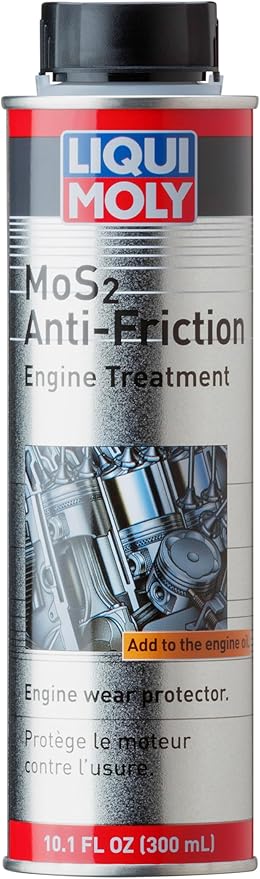
Liqui Moly MoS2 Anti-Friction
Friction modifiers reduce metal-to-metal contact between moving engine parts, improving efficiency and reducing long-term wear. Liqui Moly MoS2 Anti-Friction Engine Treatment uses molybdenum disulfide as its active ingredient. TVT Green by Modern Spartan Systems is another product in this category, though its claim of penetrating metal on a molecular level is not independently verified.
Viscosity Index Improvers
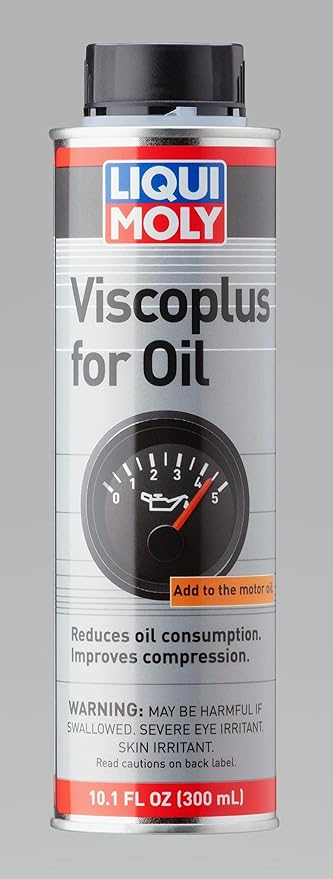
Liqui Moly Viscoplus

Ford Fluid XL-3 Friction Modifier
These additives help oil maintain the right thickness across a wide temperature range. Without them, oil can become too thin at high temperatures or too thick in cold conditions, both of which reduce protection. Valvoline Engine Oil Treatment is noted for its effect on viscosity. Lucas Oil Heavy Duty Oil Stabilizer is widely used to thicken oil in older engines to reduce consumption and quiet noisy components.
Oil Stabilizers

Lucas Oil Heavy Duty Oil Stabilizer

Nano Pro MT Oil Stabilizer
Stabilizers are designed to reduce oil burning, quiet noisy valve lifters, and help oil cling to engine surfaces during long periods of inactivity. Lucas Oil Heavy Duty Oil Stabilizer is one of the most commonly used products in this category. Restore Engine Restorer takes a different approach, using microscopic copper and lead particles intended to fill scoring in cylinder walls. It is not recommended for modern engines that use high-pressure, oil-controlled variable valve timing systems.
Antifoamants
Most high-quality oils already include antifoamants in their base formulation. These compounds reduce the surface tension of air bubbles so foam does not develop in the oil. Foam raises operating temperatures and accelerates corrosion, so preventing it matters even if it is rarely discussed.
Do Engine Oil Additives Actually Work?
The answer depends on the engine and the product. For modern engines running quality synthetic oil, most professionals say additives are unnecessary and can actually cause problems. High-quality synthetics are already formulated with robust additive packages, and introducing aftermarket chemicals can throw that balance off. Some OEM oils, for example, already contain high concentrations of molybdenum and boron.
That said, some users have reported measurable results, including fuel economy gains and lower engine temperatures. Certain flush products, such as BG EPR, have been observed to dissolve sludge and carbon from piston rings, which can restore compression and reduce oil consumption in neglected engines.
If you use a quality oil and follow a regular maintenance schedule, you likely do not need anything extra. There are specific situations, however, where an additive is worth considering.
High-mileage or worn engines that are burning oil or producing smoke may benefit from a stabilizer that increases viscosity and helps compensate for worn seals. Older and classic vehicles, particularly those built more than 25 years ago without catalytic converters, may need a high-zinc additive containing zinc dialkyldithiophosphate (ZDDP).
Modern oils have reduced zinc content to protect emissions systems, but flat-tappet camshafts in older engines depend on that zinc for protection. Newly built engines often use high-zinc additives during the first 500 miles of break-in to ensure components wear in correctly. Read about ILSAC GF-6 engine oils to see how current standards balance protection and efficiency.
If an engine has stuck piston rings or heavy carbon buildup causing oil consumption, a targeted cleaning additive may be a lower-cost option before committing to a mechanical rebuild.
Closing Notes
Most engine oil additives are within reasonable price ranges so making a purchase isn’t a huge financial risk. There are, however, other things you need to be aware of.
First, avoid thick additives in any modern engine with Variable Valve Timing (VVT), including systems marketed as VANOS or VTEC. These systems use oil pressure and precise viscosity to control valve timing. Adding a thick treatment can cause immediate problems, including misfires, limp mode, or clogged solenoid screens.
Second, be cautious with aggressive engine flushes on heavily neglected engines. When sludge has built up over a long period, it can be acting as a partial seal in worn areas. A strong flush may break that sludge loose in large pieces that clog oil passages or the oil pickup screen, which can result in catastrophic engine failure.
Related Reads
- Deep Clean Your Engine: The Ultimate Guide to 505CRO Oil Treatment Learn how 505CRO oil treatment can effectively clean your engine and enhance performance, complementing your knowledge of engine oil additive cleaners – Discover more.
- Marvel Mystery Oil Review Uncover the benefits and usage of Marvel Mystery Oil, a popular engine oil additive cleaner known for its effectiveness – Read review.
- Reducing Oil Consumption for Catalytic Converter Efficiency Explore how oil additive cleaners can help reduce oil consumption and improve catalytic converter efficiency – Find out how.
- Effective Engine Penetrating Oil: The Ultimate Solution to Prevent Jamming Learn about the best penetrating oils to prevent engine jamming and keep your engine running smoothly, enhancing your understanding of oil additives – Learn more.