Log splitters run on two distinct fluid systems: hydraulic fluid powers the splitting ram, while gas-powered models also need engine oil.
Hydraulic Fluids for Log Splitters
The hydraulic system is what gives your log splitter its splitting force. Choosing the right viscosity depends almost entirely on your operating temperature.
Most manufacturers specify AW32 or AW46 hydraulic oil. The “AW” stands for anti-wear, which means the fluid includes additives to protect the pump and cylinder from metal-on-metal contact.
The number refers to the ISO viscosity grade, which is a measure of how thick the fluid is.

STARFIRE AW32 Hydraulic Oil

Hapco Premium Hydraulic Oil AW ISO 32
AW32 is thinner and flows more easily in cold weather. If you’re splitting wood when it’s below freezing, this is your better option. Products like STARFIRE AW 32 are formulated with higher viscosity indexes (around 138 compared to the industry average of 110) which means they maintain consistent flow even as temperatures fluctuate throughout the day. For budget-conscious operators, Hapco Premium Hydraulic Oil AW ISO 32 meets the same specifications at a lower price point and blends safely with existing ISO 32 fluids during top-offs.

CAM2 Promax AW 46 Hydraulic Oil
AW46 is thicker and better suited for warm climates. If you use oil that’s too thin when it’s hot outside, you risk pump inefficiency and seepage past the seals. CAM2 Promax AW 46 is engineered for extended service intervals—up to 8,000 hours—and features an unusually low pour point (-40°F) for a 46-weight oil, giving it a wider operational temperature range. Presidential Hydraulic Oil 46 uses Group II base stocks, which stay cleaner and resist sludge formation better than budget alternatives, making it a solid choice if your equipment sits idle for months at a time.
Some operators use Automatic Transmission Fluid (ATF), particularly Dexron III, as a substitute. ATF flows exceptionally well in extreme cold (below 32°F) which makes it popular with people who split firewood in winter. It also contains anti-foaming agents and additives designed to extend seal life.
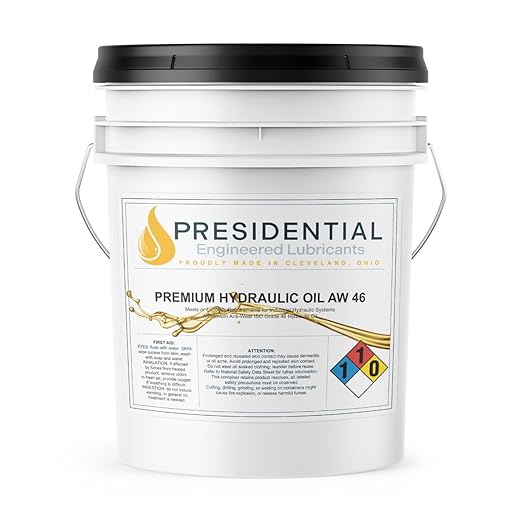
Presidential Hydraulic Oil 46
Never mix ATF with standard hydraulic oil. The mixture will foam up, and a foamy hydraulic system won’t generate the pressure needed to split wood. If you’re switching fluids, drain the system completely first.
Universal Tractor Fluid (also called Tractor Hydraulic Fluid or TDH oil) is another option. It behaves similarly to a multi-grade 10W-30 motor oil but is formulated specifically for hydraulic systems. It’s a solid middle-ground choice if you operate in varying temperatures and don’t want to change fluids seasonally.
You’ll also see specialized blends on the market, like HYD46+, which are made from virgin base oils and marketed for longer service life. While these can work well, they’re typically more expensive than standard AW fluids. The decision essentially boils down to whether the added cost justifies the convenience of extended drain intervals for your particular use case.
Engine Oils for Log Splitters

Stens 4-Cycle Engine Oil SAE 10W-30
Gas-powered log splitters use small engines similar to what you’d find on a lawn mower or generator. The weight you choose depends on startup and operating temperature.
10W-30 is the most common recommendation. It provides good protection across a wide temperature range and is what most small-engine manufacturers specify. Products like Stens Shield 4-Cycle Engine Oil SAE 10W-30 meet API SJ specifications and include zinc booster packages designed specifically to reduce wear during heavy splitting cycles, while maintaining protection when the engine runs hot.
If you’re operating in cold weather, 5W-30 is the better choice. That first number—the “5W”—means it flows faster at startup than 10W-30. This is critical because most engine wear happens during the first few seconds after a cold start, before oil circulates fully through the system. At full operating temperature, both 5W-30 and 10W-30 perform like a 30-weight oil. The difference is entirely in how they handle cold starts. Briggs & Stratton SAE 5W-30 synthetic oil, for example, significantly improves cold-weather starting below 40°F while also reducing oil consumption during operation.

Briggs & Stratton SAE 5W-30
For warmer climates where temperatures consistently stay above 40°F, straight SAE 30 works well. Briggs & Stratton SAE 30 contains a robust zinc alkyldithiophosphate additive package (1164 ppm zinc, 1045 ppm phosphorus) that protects against wear in air-cooled engines during heavy splitting cycles. Below 40°F, expect hard starting with straight-weight oils—this is when you switch to a multi-grade or synthetic.
For commercial applications or engines with specific requirements, you might see recommendations for 10W-40 or 15W-50 small-engine oils. These heavier weights are designed for sustained high-load operation, but they’re not typical for most homeowner equipment.
Maintenance and Storage Fluids
Seasonal storage and routine maintenance require a few additional products.
Fogging oil is an absolute must-have for winterizing. It protects the engine’s internal components during long-term storage by coating cylinder walls, valves, and piston rings with a corrosion-resistant film.

STA-BIL Fuel Stabilizer
Fuel stabilizers like STA-BIL prevent gasoline from gumming up the carburetor or attracting moisture. There’s debate among users about whether to run the engine dry or add stabilizer to a full tank. Running it dry sounds logical, but it can leave residual fuel that still clogs the system.
The better approach is to fill the tank and add stabilizer, which keeps the fuel system lubricated and sealed against air intrusion. This is especially important with ethanol-blended fuels, which degrade faster than pure gasoline.

Gumout Parts Cleaner and Degreaser
Parts cleaners are essential during service to prevent dirt from entering the hydraulic or oil systems. Chlorinated brake cleaner or specialized parts cleaners (like GumOut Parts Cleaner) work well because they evaporate quickly without leaving residue. You’ll use these most when changing engine oil.
Many splitter designs lack a direct drain hole through the base plate, so oil tends to spill onto the frame during changes. A quick spray with parts cleaner keeps things tidy and prevents contamination.
Closing Notes
Choosing the right fluids for your log splitter isn’t complicated, but it does require attention to operating temperature and manufacturer specifications. Use AW32 hydraulic oil for cold weather, AW46 for warm climates, and never mix ATF with standard hydraulic fluid. For engine oil, 10W-30 works well year-round, while 5W-30 synthetic provides better cold-start protection and extended service life.
The most common mistakes are using the wrong hydraulic viscosity and neglecting seasonal maintenance. A log splitter that sits for months needs fogging oil to prevent corrosion and fuel stabilizer to keep the carburetor from clogging. These aren’t optional steps—they’re the difference between a machine that starts reliably in spring and one that requires carburetor rebuilding.
Check your hydraulic filter’s micron rating before replacement. A 10-micron filter on a system designed for 25-micron filtration will restrict flow and damage the pump. Similarly, verify your engine oil capacity before buying. Common 6.5 HP engines hold around 20 ounces, and overfilling causes as many problems as running low.
Your splitter will outlast the woodpile if you treat maintenance as preventive. Change fluids based on hours and visual inspection, not just calendar intervals.